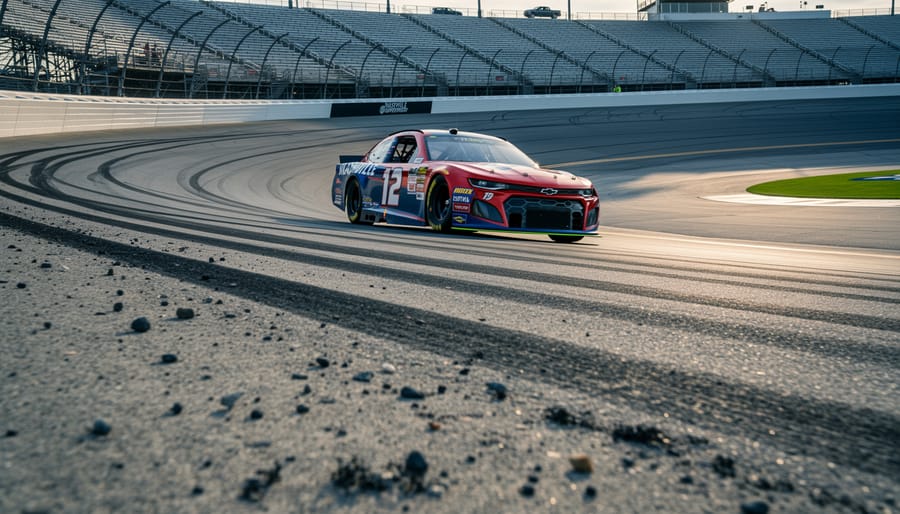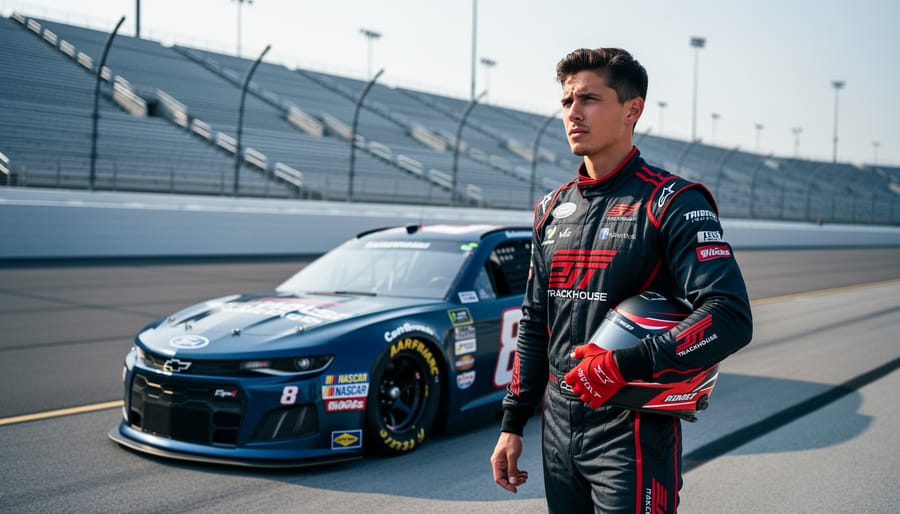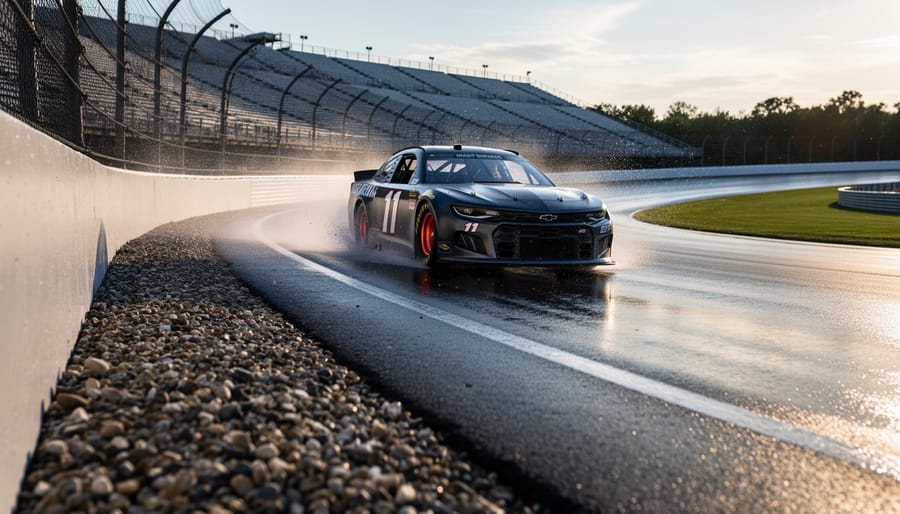
Michigan’s deep NASCAR roots extend well beyond the banked turns of Michigan International Speedway, stretching north across the border to Canadian Tire Motorsport Park, where drivers from the Great Lakes State regularly test their skills on one of North America’s most challenging road courses. This cross-border connection serves a practical purpose: aspiring NASCAR professionals and weekend racers alike recognize that mastering CTMP’s ten demanding turns and 80-foot elevation changes makes them faster, more versatile competitors when they return to the oval circuits that dominate their home state’s racing calendar.
The relationship between Michigan’s NASCAR community and CTMP reflects a broader truth about modern stock car racing. Road course competency has become essential rather than optional. With NASCAR’s national series increasingly featuring tracks like Watkins Glen, Sonoma, and the Charlotte Roval, Michigan drivers who grew up perfecting left-turn technique now need braking zones, heel-toe downshifts, and apex management in their skill set. CTMP, just a four-hour drive from Detroit, offers that education without the expense or logistics of traveling to distant American road courses.
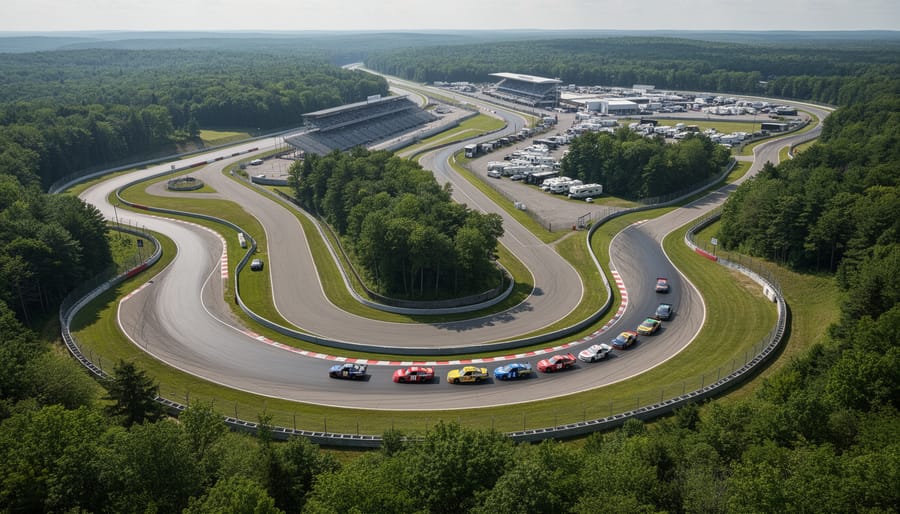
Canadian racing fans watching NASCAR often notice familiar Michigan names on entry lists at CTMP during regional series events. The track’s proximity to major population centers in both countries has created an unusual motorsports hub where the traditional Canada-U.S. rivalry gives way to shared technical knowledge and respect for a circuit that humbles even experienced drivers. The 2.459-mile layout punishes mistakes with gravel traps and concrete barriers, demanding precision that translates directly to better racecraft regardless of track configuration.
Understanding why Michigan’s NASCAR scene gravitates toward CTMP requires examining both the technical benefits drivers gain and the cultural ties binding these two automotive-obsessed regions.
The Michigan-Ontario Racing Corridor
Geographic Advantage and Racing History
The drive from Detroit to Canadian Tire Motorsport Park takes roughly four hours, a distance shorter than many NASCAR drivers travel between their North Carolina home bases and tracks within the United States. This geographic convenience has shaped a natural racing corridor between Michigan’s concentrated motorsports industry and Ontario’s premier road course since CTMP opened as Mosport Park in 1961.
Michigan’s automotive manufacturing dominance created an ecosystem where racing talent, engineering expertise, and performance shops clustered around Detroit, Dearborn, and surrounding communities. When Canadian Tire Motorsport Park established itself as a world-class facility hosting everything from Formula One to sports car endurance events, Michigan drivers found a challenging road course practically in their backyard. The border crossing at Port Huron or Detroit-Windsor became routine for racers hauling equipment north.
This proximity fostered decades of cross-pollination between Michigan’s oval racing culture and Canadian road racing traditions. Michigan short track champions cut their teeth on CTMP’s unforgiving layout during the 1970s and 1980s, while Canadian drivers ventured south to compete on Michigan’s storied speedways. The relationship intensified when NASCAR sanctioned the Canadian Tire Series in 2007, creating an official pathway that legitimized what Michigan racers had practiced informally for years: using CTMP as a development ground for skills that translated directly to NASCAR’s evolving competition landscape.
Cross-Border Racing Culture
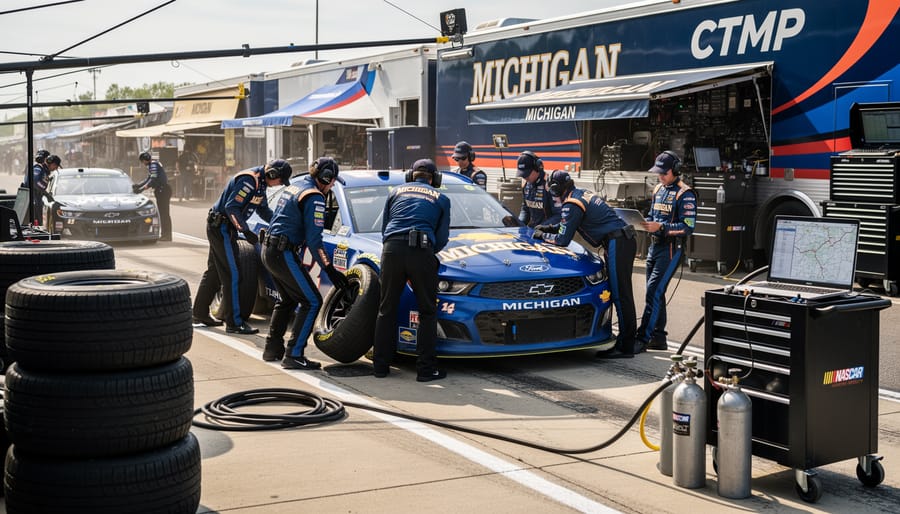
The racing bond between Michigan and Ontario runs deeper than geography, it’s built on decades of shared tracks, teams, and talent pipelines. Weekend warriors from Detroit regularly tow their race cars across the Ambassador Bridge, while Ontario drivers cut their teeth at Michigan short tracks before advancing to larger circuits. This two-way flow has created a racing ecosystem where drivers develop skills on both sides of the border.
NASCAR recognized this connection when structuring its Canadian presence. The NASCAR Pinty’s Series, Canada’s top stock car championship, draws significant Michigan participation. Crew chiefs, engineers, and drivers from American NASCAR teams frequently consult with or compete in Pinty’s events at CTMP, treating the series as both a proving ground and a laboratory for road course development.
Driver academies and racing schools in both regions now design programs that intentionally expose students to both oval and road course disciplines. Michigan-based racing families often send young drivers to CTMP for summer road racing programs, while Ontario talent heads south for oval track experience. This cross-pollination produces more versatile drivers who understand multiple racing disciplines, exactly what modern NASCAR demands.
What Makes CTMP Different for Oval-Trained Drivers
From Banking to Brake Zones
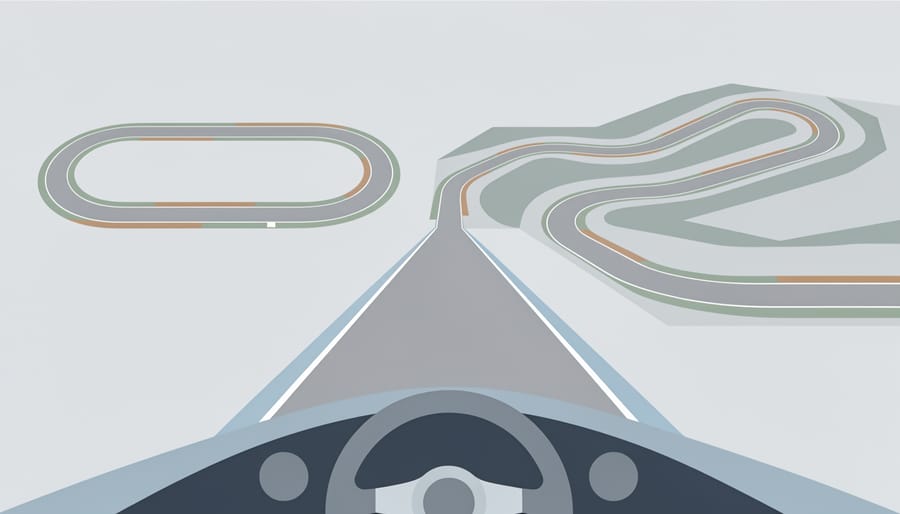
Moving from NASCAR’s high-banked speedways to CTMP’s 10-turn, 2.459-mile layout forces Michigan drivers to rewire their instincts. On oval tracks, drivers hold the throttle wide open through sweeping turns where momentum and banking do much of the work. At Bowmanville, they’re suddenly braking hard into tight corners, managing weight transfer through complex sequences, and learning to trust the chassis in ways they never had to before.
The braking zones alone present a massive adjustment. Instead of the steady lift-and-coast approach that works on banked ovals, CTMP demands threshold braking, hitting the pedal hard enough to slow the car without locking the wheels, then trailing off pressure as the corner tightens. That’s foreign territory for drivers who’ve spent careers managing momentum rather than scrubbing speed.
Cornering becomes a puzzle of apexes and exit speeds rather than a consistent arc. CTMP’s turns vary dramatically in radius and character, from the fast sweeper of Turn 2 to the tight hairpin of Turn 5. Each demands a different line, different throttle application, and different reference points. Oval drivers accustomed to finding one groove and perfecting it must now read each corner independently, adjusting their approach lap after lap.
Throttle management shifts from smooth, progressive inputs to aggressive stabs and careful modulation. Getting back to power too early unsettles the car; waiting too long costs seconds down the following straight.
The Technical Challenge of Corner 8
Corner 8 at CTMP earned its reputation as one of North America’s most treacherous turns through a combination of factors that punish stock car drivers accustomed to oval predictability. This fast, off-camber right-hander sits at the end of a downhill plunge, forcing drivers to brake while the track falls away beneath them, a scenario rarely encountered on banked ovals where gravity assists rather than disrupts weight transfer.
The corner’s negative camber slopes away from the apex, meaning the car wants to slide toward the outside wall precisely when drivers need maximum grip. NASCAR drivers conditioned to trust consistent banking find themselves fighting physics instead of using it. You’re braking hard, turning in while going downhill, and the pavement is literally tilting against you.
What makes Corner 8 especially brutal is its limited margin for error. Misjudge your braking point by half a car length and you’ll either understeer into the gravel trap on exit or overcook the entry and lose critical time. The repaved section added further complications, creating a grip transition mid-corner that demands absolute precision with throttle application, a far cry from the smoothly banked transitions Michigan drivers master at tracks like MIS.
Elevation Changes and Vision
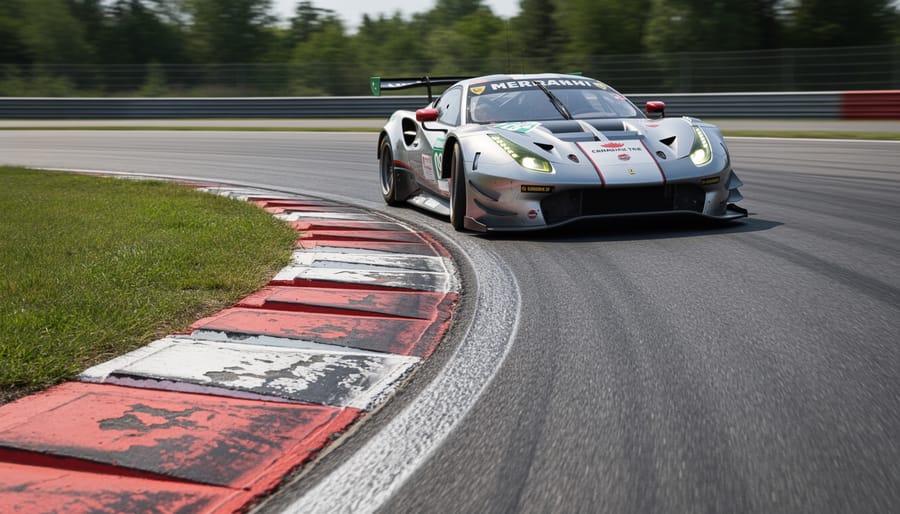
Drivers trained on Michigan’s relatively flat oval circuits face a steep learning curve at CTMP, where the track drops 150 feet from its highest to lowest point. This dramatic elevation change forces competitors to abandon their familiar visual cues. On ovals, drivers spot brake markers and apex points from a consistent plane. At Bowmanville, corners like Turn 2 plunge downhill while others climb sharply, compressing or extending sight lines unpredictably. You can’t rely on fixed reference points when the track itself rises and falls beneath you. Michigan stock car racers must retrain their eyes to read terrain contours, judge braking distances on descents where momentum builds faster, and trust their peripheral vision through blind crests where the next corner appears only at commitment point.
NASCAR Series Racing at CTMP
NASCAR Pinty’s Series Connection
The NASCAR Pinty’s Series represents Canada’s top-tier stock car racing championship, sanctioned by NASCAR and featuring 13 rounds across iconic Canadian circuits, with Canadian Tire Motorsport Park hosting multiple events each season. While the series predominantly showcases Canadian talent, its proximity to Michigan and NASCAR sanctioning has made it an attractive proving ground for American drivers seeking road course experience and competitive seat time.
Michigan-based drivers have historically viewed the Pinty’s Series as a strategic development opportunity. The series runs Chevrolet Camaros and Toyota Camrys built to specifications that mirror NASCAR’s regional touring series, creating a familiar environment for drivers transitioning from American short tracks. The competitive field typically includes 20-25 full-time entries, mixing seasoned veterans with development drivers, all competing for manufacturer backing and potential advancement to NASCAR’s national series.
CTMP’s Victoria Day SpeedFest and the season finale typically draw the series’ strongest fields, with lap times often separated by tenths of a second. The purse structure and television coverage through TSN provide legitimate exposure, crucial for young drivers building sponsorship portfolios. For Michigan racers, the series offers something increasingly rare: affordable, competitive stock car racing at a professional level without the prohibitive costs of NASCAR’s Xfinity or Truck Series campaigns.
The championship battle frequently comes down to road course specialists who master CTMP’s technical demands versus oval specialists who dominate shorter tracks in the Maritime provinces and Ontario’s rural circuits.
Regional and Development Series
Beyond the NASCAR Pinty’s Series, Canadian Tire Motorsport Park serves as a crucial proving ground for NASCAR-sanctioned regional and developmental racing programs that attract Michigan talent seeking road course experience. The NASCAR Whelen All-American Series, which operates across dozens of tracks throughout North America, has historically included drivers who use CTMP as a testing and development venue during their progression through NASCAR’s ladder system.
CTMP’s role extends to various regional touring series and development programs that feed into higher NASCAR tiers. Michigan drivers competing in late model stock car series often make the trek north to participate in CTMP’s open practice days and regional events, recognizing that road course proficiency has become essential for advancing in modern NASCAR competition. The track’s technical demands make it an ideal environment for young drivers to develop car control, racecraft, and adaptability before facing similar challenges at NASCAR-sanctioned road courses like Watkins Glen or Road America.
Track officials at CTMP have maintained strong relationships with NASCAR-recognized driving schools and development programs, creating pathways for American talent to gain valuable road racing credentials. These programs typically run during CTMP’s extensive racing calendar, which spans from May through October, offering multiple opportunities for Michigan-based drivers to compete against Canadian competitors and refine skills that directly translate to NASCAR’s increasingly diverse schedule of racing disciplines.
Michigan Drivers Who’ve Made Their Mark at CTMP
While Canadian Tire Motorsport Park doesn’t host NASCAR Cup Series events, it has served as a crucial proving ground for Michigan drivers climbing the motorsport ladder and those competing in NASCAR’s regional series. Several drivers with deep Michigan roots have used CTMP to hone their craft before advancing to national competition.
The track’s significance extends beyond lap times and podium finishes. For Michigan-based drivers accustomed to the short tracks and speedways that dot the Great Lakes region, CTMP represents a masterclass in car control and racecraft. The circuit forces drivers to develop skills that translate directly to NASCAR’s road course events at Watkins Glen, Road America, and the Charlotte Roval.
Notable Michigan drivers who’ve competed at CTMP have consistently emphasized how the track accelerated their development:
- Austin Theriault from Fort Kent (who raced extensively in Michigan) earned multiple top-five finishes in NASCAR Pinty’s Series competition at CTMP, crediting the track with improving his braking consistency for Cup Series road courses.
- D.J. Kennington, though Canadian-born, established strong ties to Michigan racing programs and dominated at CTMP with four Pinty’s Series victories, demonstrating how mastering the circuit opens doors to cross-border opportunities.
- Several Michigan ARCA drivers have used CTMP test sessions to prepare for road course events, with drivers reporting immediate improvements in their ability to manage tire degradation and find alternative racing lines.
- Young Michigan talent from NASCAR’s weekly series have participated in CTMP driving schools and open track days, using the circuit as an affordable way to gain road racing experience without traveling to more distant venues.
The learning curve at CTMP can be steep. Michigan drivers report that their first few sessions typically involve unlearning oval-specific habits, particularly the tendency to carry too much speed into corners and rely on banking to maintain momentum. The flat, technical nature of CTMP’s corners demands precise brake modulation and earlier turn-in points than most Michigan oval racers anticipate.
What sets CTMP apart is its ability to expose weaknesses in car setup and driving technique that might go unnoticed on simpler circuits. Michigan drivers who’ve invested time at the track consistently describe it as a accelerated education in vehicle dynamics, race strategy, and the mental discipline required for sustained performance on demanding road courses.
How Road Course Experience Translates to NASCAR Success
NASCAR’s Evolving Schedule
NASCAR’s landscape has transformed dramatically over the past decade, with road courses claiming a significantly larger share of the Cup Series calendar than at any point in the sport’s history. Where oval racing once dominated nearly 90 percent of the schedule, modern NASCAR features six to seven road course events per season, including traditional venues like Watkins Glen and Sonoma alongside newer additions like Circuit of The Americas and the Indianapolis road course.
This shift reflects both fan demand for varied racing and NASCAR’s strategic push to showcase driver versatility. The 2021 schedule shake-up marked a turning point, adding road courses while reducing cookie-cutter 1.5-mile oval races that had produced processional racing. For drivers, this evolution means road course proficiency is no longer a specialty skill but a fundamental requirement for championship contention.
Teams now invest heavily in road course simulation and testing, recognizing that one-third of playoff races could occur on twisting circuits rather than traditional ovals. Drivers who once viewed road racing as an occasional novelty now face career consequences for poor performance on these tracks, making venues like CTMP invaluable training grounds where they can develop cornering precision and racecraft away from the Cup Series spotlight.
Skill Transfer and Adaptability
The precision braking demanded by CTMP’s technical corners sharpens a driver’s ability to threshold brake without locking up, a skill that translates directly to road course events at Watkins Glen and Sonoma. Michigan drivers who master CTMP’s late-braking zones into corners like Turn 2 and Turn 8 develop superior brake modulation that also helps them manage tire wear on NASCAR’s longer oval runs.
CTMP’s elevation changes force drivers to adjust their visual reference points constantly, improving spatial awareness and reaction time. When these drivers return to restrictor-plate racing at Daytona or Talladega, that enhanced situational awareness helps them anticipate pack movements and close gaps more effectively.
The road course environment teaches throttle discipline that benefits oval racing more than many realize. CTMP penalizes drivers who get greedy with the accelerator mid-corner, instilling patience with power application. Back on ovals, this translates to smoother exits off Turn 4 and better acceleration down straightaways, where maintaining traction matters as much as raw horsepower.
Perhaps most valuable is the adaptability itself. Drivers who can switch between CTMP’s demanding road course and Michigan International Speedway’s high-speed oval develop mental flexibility that serves them across NASCAR’s increasingly diverse schedule.
Planning Your Visit: Racing Events and Track Days at CTMP
Border Crossing Considerations
Crossing the border to attend events at CTMP requires minimal paperwork for spectators. U.S. citizens need a valid passport or enhanced driver’s license. If you’re bringing photography equipment or binoculars, declare them to avoid complications on your return.
For drivers transporting racing equipment or vehicles, documentation becomes more critical. Bring proof of vehicle ownership, equipment receipts, and consider a carnet for expensive gear you’ll be bringing back. Commercial racing teams often use customs brokers to streamline entry. Declare all racing tires, tools, and spare parts. The Canada Border Services Agency typically allows temporary importation for motorsport purposes, but failing to declare items can result in delays or confiscation.
Plan for border wait times, especially during summer weekends when racing events coincide with tourist traffic. The Port Huron-Sarnia or Detroit-Windsor crossings offer convenient routes from Michigan. Check current border wait times online before departure, and ensure your vehicle insurance covers Canadian operation.
The relationship between Michigan NASCAR drivers and Canadian Tire Motorsport Park represents more than a convenient geographic connection. It’s become a proving ground where oval-trained competitors sharpen skills that directly translate to success in modern NASCAR’s increasingly diverse schedule. As stock car racing continues expanding its road course presence, circuits like CTMP offer irreplaceable experience that Michigan drivers can’t fully replicate at home.
This cross-border collaboration benefits both racing communities. Michigan brings a deep talent pool and competitive intensity shaped by decades of oval racing tradition. CTMP provides the technical challenges and road racing expertise that transform good oval drivers into complete racers. The NASCAR Pinty’s Series has formalized this relationship, but countless development drivers, track day participants, and racing school students continue building the foundation for future collaboration.
Looking ahead, expect this connection to strengthen. With NASCAR’s Cup Series running more road courses than ever, the value of CTMP experience will only increase for Michigan-based drivers climbing the ladder. The circuit’s reputation as a driver development catalyst is well-established, and its proximity to Michigan’s racing infrastructure makes it an obvious choice for teams investing in versatile talent.
For Michigan racing fans, CTMP offers accessible world-class road racing just across the border. Whether you’re watching NASCAR Pinty’s competition, attending a regional event, or taking your own car on track, the Bowmanville circuit remains one of North America’s most rewarding motorsports destinations.