NASCAR Chase points are the scoring system that determines which drivers compete for the Cup Series championship and ultimately crowns the season’s winner. In 2026, NASCAR brought back the Chase format after years of different playoff structures, creating a straightforward 10-race postseason where accumulated points decide everything.
The system works by resetting points after the regular season concludes at Daytona, with the top 16 drivers qualifying for the Chase. Unlike previous playoff formats that featured multiple elimination rounds, this single-round approach rewards consistent performance across all 10 playoff races. The driver leading the standings after the season finale at Homestead-Miami takes home the championship trophy.
For Canadian racing fans who follow NASCAR action at venues like Canadian Tire Motorsport Park or watch the Cup Series on television, understanding the Chase points structure is essential to following the championship battle. A win now carries significant weight at 55 points, making each victory a substantial boost in the playoff standings.
This article breaks down exactly how drivers qualify for the Chase, how points are allocated throughout the playoffs, and what separates the 2026 system from NASCAR’s previous championship formats. Whether you’re tracking standings week-to-week or trying to understand what your favorite driver needs to capture the title, knowing the mechanics behind Chase points transforms how you experience the final 10 races of the season.
What NASCAR’s Chase Points System Means

The Chase is NASCAR’s playoff system that narrows the championship battle to the season’s best-performing drivers. For 2026, NASCAR brought back the Chase format, replacing the multi-round elimination system that had defined recent seasons. Instead of progressively cutting the field through multiple playoff rounds, the 2026 Chase operates as a single, 10-race postseason shootout where consistency and points accumulation determine who lifts the Cup Series trophy.
Here’s how the terminology breaks down:
- Chase
- NASCAR’s playoff format that determines the Cup Series champion through a postseason points competition among qualified drivers.
- Playoff Driver
- One of the 16 drivers who qualify for the Chase based on their regular-season points standing after the finale at Daytona.
- Points Reset
- The one-time adjustment that occurs when the Chase begins, setting all 16 playoff drivers on equal footing for the postseason battle.
- Regular Season vs. Postseason
- The regular season encompasses all races leading up to Daytona’s finale, while the postseason refers to the 10-race Chase that follows and decides the champion.
The fundamental concept is straightforward: after the regular season concludes at Daytona, the top 16 drivers in the points standings enter the Chase. Points reset once at that moment, then the championship becomes a cumulative points race across 10 playoff events. No drivers get eliminated along the way. The driver with the most points after the final race at Homestead-Miami wins the championship.
This format rewards sustained excellence rather than single-race heroics. A driver can’t advance on a lucky win if their overall playoff performance falls short. Every finish matters, every point counts, and the champion must prove themselves across nearly three months of high-pressure racing rather than in one winner-take-all finale.
How NASCAR’s Chase Points System Works in 2026
Qualifying for the 2026 Chase
The 16 playoff spots in NASCAR’s 2026 Chase are straightforward: they go to the top 16 drivers in the points standings after the regular-season finale at Daytona. Unlike previous playoff formats that included automatic berths for race winners, the 2026 system relies purely on cumulative points performance across the regular season. If you finish the regular season ranked 16th or better in points, you’re in the Chase. If you’re 17th, you’re watching from the sidelines regardless of how many wins you racked up earlier in the year.
This marks a shift toward rewarding season-long consistency rather than single-race performance. Drivers can’t clinch a playoff spot with a mid-season victory and then coast, they need to keep scoring points week after week to stay inside that top-16 cutoff. The regular season runs from February through the Daytona race in late August, giving teams roughly 26 races to secure their playoff position. Once those 16 spots are locked in, points reset and the 10-race playoff battle begins.
Points Allocation and Scoring
Understanding how points are awarded in the 2026 Chase requires distinguishing between race finish points and the total points a winning driver receives. NASCAR’s system combines multiple point components to arrive at the final tally.
At the core, drivers earn race finish points based on where they cross the line. The winner receives 40 points for first place, while second place earns 35 points, third gets 34, fourth receives 33, and so on down through the field. These are the baseline points every driver collects according to their finishing position.
However, a race winner does not walk away with just 40 points. The 55-point total for a win comes from adding bonus points to those baseline race finish points. A winning driver earns 40 points for finishing first, plus an additional 15 bonus points for the victory itself. This bonus structure rewards winning above simply finishing in the top spot, incentivizing drivers to push for victories rather than settle for safe, points-preserving finishes.
Stage racing adds another layer. Drivers can earn additional bonus points by winning the first two stages of each race, providing opportunities to accumulate points before the checkered flag even falls. These stage points become particularly valuable during the playoffs, where every point can influence championship position.
Once the Chase begins and points reset for the 16 playoff drivers, this scoring structure remains consistent across all 10 playoff races. The cumulative nature of the 2026 format means each race finish and every bonus point earned carries equal weight toward the final championship tally at Homestead-Miami, making point management crucial throughout the entire playoff run.
The Points Reset and Playoff Structure
The 2026 Chase format resets points only once, right after the regular season concludes at Daytona. When the playoff field of 16 drivers is set, everyone’s regular-season points total is wiped clean. Each playoff driver starts the Chase on equal footing, though any bonus points earned during the regular season (for wins and stage victories) carry over into the reset totals.
Once the playoffs begin, there are no further resets. The 10-race Chase runs as a single, cumulative points battle. Drivers earn points at each playoff race based on finishing position, with wins worth 55 points (combining the base race-finish points with playoff bonuses). Second place earns 35 points, and the scale continues downward from there.
This structure rewards consistency and sustained performance across all 10 playoff races. A driver who finishes in the top five throughout the Chase can beat a competitor who wins twice but struggles in other races. The points leader after the final checkered flag falls at Homestead-Miami wins the Cup Series championship, no eliminations, no final-four showdown, just pure points racing over a 10-race stretch. It’s a format that brings the focus back to accumulating points rather than surviving elimination rounds.
Race-by-Race Playoff Dynamics

The 2026 format shifts playoff strategy away from must-win desperation toward calculated points management. With no elimination rounds, every position matters across all ten races, finishing second consistently can beat a driver who wins twice but struggles in other events. Teams must weigh the value of aggressive moves for stage points against the risk of damage that could cost finishing positions. Early playoff races at tracks like Richmond Raceway guide set the tone, but no single race eliminates contenders. Instead, points deficits accumulate or shrink race by race, making mid-pack finishes valuable and rewarding drivers who avoid costly mistakes. The cumulative scoring means a bad day hurts, but recovery remains possible through strong performances in subsequent races, creating sustained championship battles that often aren’t decided until Homestead-Miami.
Key Components of the 2026 Chase Format
The 2026 Chase format strips away the complexity of recent playoff systems and focuses on three core elements that shape the entire championship battle.
Field Size: 16 Drivers
NASCAR’s return to the Chase brings back the 16-driver playoff field. After 26 regular-season races culminating at Daytona, the top 16 drivers in the points standings earn their spot in the championship hunt. This field size balances exclusivity with competition, creating a playoff bracket large enough to include most competitive teams while maintaining the prestige of playoff qualification. Unlike formats that guaranteed entry through wins alone, the 2026 system relies purely on points accumulation during the regular season.
Race Count: 10 Playoff Events
The championship plays out across 10 races, giving drivers roughly a third of a full season to prove their mettle when it matters most. This extended playoff window rewards sustained performance rather than single-race heroics. Teams must maintain consistency across diverse tracks and conditions, from short ovals to intermediate speedways, before reaching the season finale at Homestead-Miami.
Championship Determination: Cumulative Points
Here’s where 2026’s Chase differs most dramatically from elimination formats. The driver with the most points after Homestead-Miami wins the championship, period. There’s one points reset after the regular season to level the playoff field, then it’s a straightforward accumulation race. Wins are worth 55 points, providing significant advantages but not automatic advancement. Every position matters throughout all 10 races.
The defining characteristics of this system include:
- 16-driver playoff field determined by regular-season points
- 10-race championship schedule from post-Daytona through Homestead-Miami
- Single points reset at the playoff start with no mid-playoff resets
- Points-based title decided by cumulative total after the finale
- No elimination rounds or win-and-advance scenarios
This streamlined structure emphasizes points racing strategy. Drivers can’t bank on a single clutch victory to save their season. Instead, they’ll manage risk across 10 races, balancing aggressive moves for wins against the need to accumulate points consistently and avoid costly mistakes that could drop them down the standings with no reset to erase the damage.
How the Chase Format Applies to NASCAR Racing
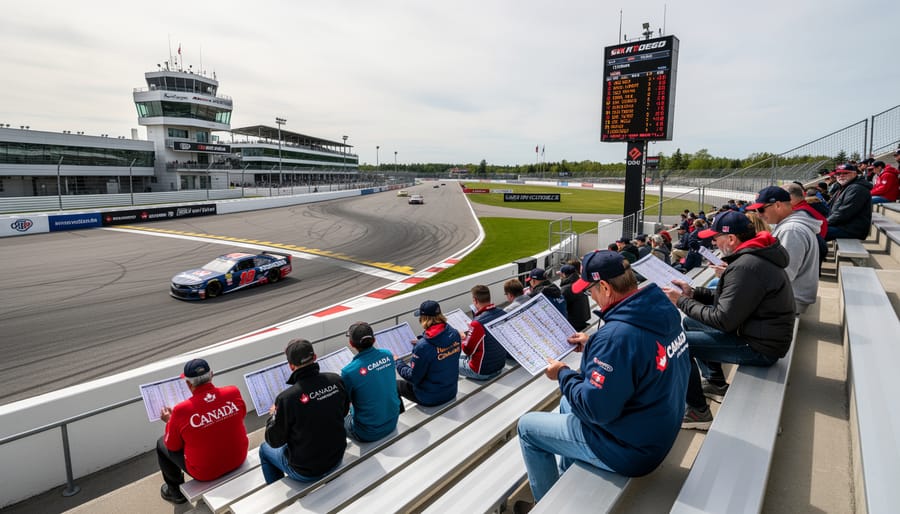
The 2026 Chase format transforms how teams and drivers approach the final 10 races of the season. Unlike the multi-round elimination format used in recent years, this single-round playoff rewards consistency and strategic points management. Teams must balance aggressive racing for wins (worth 55 points each) with minimizing risk to protect their standing, since a single poor finish can knock them out of championship contention with no second chances.
For crew chiefs and strategists, the format shifts calculations. With no mid-playoff resets, every point matters from the moment the field is set after Daytona. A driver leading by 20 points at Phoenix still needs to defend that margin through three more races. Pit strategy becomes more conservative when protecting position is worth more than gambling for a win, particularly for drivers hovering near the top of the standings who can clinch by finishing consistently inside the top 10.
The format also changes how drivers race each other. In earlier elimination systems, a single win could advance you to the next round regardless of other finishes. Now, accumulating points across 10 races is paramount. This creates strategic dilemmas: do you risk everything for a 55-point win at Talladega for fans expecting chaos, or settle for a safe top-five that pads your margin?
For fans tracking the championship, the math is simpler but the tension builds differently. Rather than watching for sudden eliminations, you follow cumulative point gaps shrinking or widening over 10 weeks. A 50-point lead with two races left feels commanding but not insurmountable if the leader stumbles at Martinsville while their rival wins.
Drivers at all levels study these playoff dynamics. The NASCAR drivers in Canada who compete at Canadian Tire Motorsport Park analyze how points accumulation under pressure separates champions from contenders, applying those lessons to their own championship runs in regional series.
What Fans Need to Know About Following 2026 Chase Standings
The 10-race playoff format rewards consistency, making every finishing position crucial to championship hopes. Canadian fans can follow the official NASCAR standings page, which updates in real time as races conclude, showing each driver’s total points and their gap to the leader. During broadcasts on TSN and Sportsnet, graphics display the current standings and points margins, helping you track how each race result shifts the championship picture.
Pay attention to points differentials between drivers as the playoff progresses. Since there are no elimination rounds or points resets after the initial reset entering the Chase, a driver trailing by 30 points with five races remaining faces a manageable deficit through strong finishes. Watch for momentum shifts: a driver who strings together three consecutive top-five results can make up significant ground, while a single poor finish outside the top 20 can cost 20-30 points compared to playoff rivals.
The championship scenario becomes clearer as Homestead-Miami approaches. With no dramatic final-four showdown, you’ll see the points battle tighten or separate naturally across the final races. Check standings after each event to see which drivers need aggressive strategy versus those protecting a points cushion, as this running tally determines who hoists the Cup trophy when the checkered flag falls in Miami.
Frequently Asked Questions About NASCAR’s Chase Points
How many drivers make the Chase in 2026?
Sixteen drivers qualify for the 2026 Chase, determined by the top 16 in points after the regular-season finale at Daytona. These 16 drivers then compete in the 10-race playoff for the championship.
How are Chase points calculated in the 2026 format?
Points reset once when the Chase begins after the regular season, giving all 16 playoff drivers a fresh start. A race win is worth 55 points total, combining race finish points with playoff bonus points. Points accumulate across all 10 playoff races with no further resets, and the driver with the most points after Homestead-Miami wins the championship.
What happens if there’s a points tie at the end of the playoffs?
Specific tie-breaker procedures for the 2026 Chase format have not been publicly detailed by NASCAR. Historically, NASCAR has used criteria like number of wins or best finishes to resolve championship ties, but the exact protocol for this year’s single-round playoff remains to be clarified.
How does the 2026 Chase differ from previous playoff formats?
The 2026 Chase returns to a single-round, 10-race playoff structure that rewards consistent points racing, eliminating the multi-round elimination format used in recent years. Instead of drivers being knocked out in stages, all 16 playoff contenders race for cumulative points across the entire postseason, with the points leader after the finale claiming the title.
These questions reflect the most common concerns Canadian racing fans have as they follow the 2026 playoff battle. The simplified structure makes it easier to track championship scenarios compared to the elimination format, but it also means every race matters equally. A strong finish at any playoff race contributes directly to the final championship tally, rewarding drivers who can maintain peak performance across all 10 events rather than those who peak at specific elimination rounds.
NASCAR’s return to the Chase format for 2026 marks a significant shift in how the Cup Series championship unfolds. By emphasizing consistent points racing across 10 playoff races rather than win-or-go-home elimination rounds, the system rewards drivers who can deliver strong finishes week after week. The 16-driver field competing from the regular-season finale at Daytona through to Homestead-Miami creates a straightforward championship battle: accumulate the most points over those 10 races, and you’re the champion.
For Canadian racing fans who’ve watched drivers develop their skills at venues like Canadian Tire Motorsport Park before reaching NASCAR’s premier series, the 2026 Chase offers a compelling narrative. The single points reset after the regular season and the cumulative playoff standings mean every position matters in every race. As the playoff races progress and the points gaps narrow or widen, the championship picture becomes increasingly clear. Keep track of the standings as the season finale at Homestead-Miami approaches, the driver sitting atop the leaderboard when that checkered flag falls will claim the 2026 Cup Series title.