Danica Patrick will not join Sky Sports’ Formula 1 broadcast team for the 2026 season, the network confirmed as the series kicks off this weekend at the Australian Grand Prix in Melbourne. The announcement has reignited conversations about her role in motorsports media and the evolution of racing commentary, particularly as Formula 1 continues expanding its global broadcast presence and audience reach.
Patrick remains the most commercially successful woman in American open-wheel racing history. Her transition from driver to broadcaster has been closely watched by both traditional motorsports fans and those hoping to see greater diversity in racing coverage. The former IndyCar and NASCAR competitor carved out a unique space in the sport, winning the 2008 Indy Japan 300 and becoming the first woman to lead laps at the Indianapolis 500 and win a pole position in NASCAR Cup Series competition.
For Canadian motorsports enthusiasts, Patrick’s media trajectory offers insight into how racing broadcasts are changing. Her absence from Sky Sports’ lineup this season raises questions about the future of driver-turned-commentators and what credentials networks prioritize when building their coverage teams. While her on-track achievements are undisputed, her broadcasting work has drawn mixed reviews from viewers who value technical analysis alongside personality-driven content.
The timing of Sky Sports’ decision, coming just as F1’s 2026 season launches with new technical regulations and an increasingly competitive grid, suggests networks are recalibrating their approach to race-day programming as the sport attracts broader audiences across North America and beyond.
The Sky Sports Announcement: What We Know
Sky Sports confirmed in recent days that Danica Patrick will not join its Formula 1 broadcast team for the 2026 season. The announcement came just as the racing world turned its attention to Melbourne, where the season-opening Australian Grand Prix kicks off this Friday. The timing puts an end to speculation about Patrick’s potential role in F1 coverage and clarifies the broadcaster’s lineup heading into what promises to be another compelling championship battle.
The decision represents a departure from what some motorsports observers anticipated. Patrick had developed a growing presence in racing media following her retirement from full-time competition, building credibility through various commentary roles and her podcast. Many assumed her profile and racing pedigree made her a natural fit for F1’s expanding broadcast ambitions, particularly as the series continues to grow its North American audience.
Sky Sports has not provided detailed reasoning for the decision, keeping the focus on its existing broadcast team rather than addressing Patrick specifically. This leaves Canadian F1 fans and motorsports enthusiasts to draw their own conclusions about what factored into the broadcaster’s lineup choices. What’s certain is that Sky’s coverage will proceed with its established voices as the grid heads to Albert Park Circuit for the opening race weekend.
For viewers who’ve followed Patrick’s post-racing career trajectory, the news shifts attention to where her motorsports commentary might surface instead. The broadcasting landscape offers multiple platforms and opportunities, though Sky Sports’ dominant position in F1 coverage makes this a notable path not taken.
Danica Patrick’s Racing Legacy
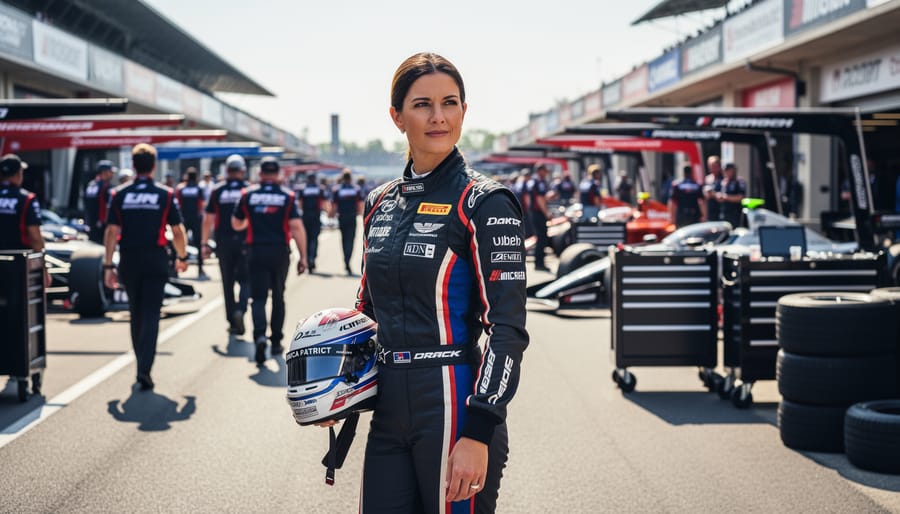
Danica Patrick didn’t just compete in motorsports, she redrew the boundaries of what seemed possible for women in American racing. Her career stands as a collection of firsts and records that remain unmatched. She became the first woman to win an IndyCar Series race when she took the checkered flag at the Indy Japan 300 in April 2008, a victory that cemented her place in racing history. No other woman has achieved that feat in the series since.
Her Indianapolis 500 performances tell the story of sustained excellence at the sport’s highest level. Patrick finished third in the 2009 race, the highest finish ever recorded by a woman at the Brickyard. She led laps in the 500 on multiple occasions, demonstrating not just participation but genuine competitiveness against the world’s best open-wheel drivers. Her 2005 rookie performance, finishing fourth, announced her arrival as a driver who belonged at the front of the field.
The numbers from her IndyCar tenure speak clearly: seven podium finishes across 116 starts, with a best championship finish of third in the 2009 standings. She consistently ran near the front for teams like Rahal Letterman Racing and Andretti Autosport, proving she could manage the physical demands and split-second decisions required in open-wheel racing.
Patrick’s transition to NASCAR in 2012 brought new challenges. Stock car racing demanded different skills, door-to-door racing, setup knowledge for heavy machines, and the strategic patience of 500-mile marathons. While victories eluded her in NASCAR’s top series, she posted a pole position at the 2013 Daytona 500, becoming the first woman to start that race from the front row. She ran full-time in the NASCAR Cup Series from 2013 to 2017, competing week after week against drivers who’d grown up in that racing discipline.
What separates Patrick’s legacy from brief motorsports appearances by other women is longevity and level. She raced at the pinnacle of American motorsports for over a decade, not as a novelty but as a funded, competitive driver who earned her seat through results and marketability alike.
From Driver to Broadcasting: Her Media Evolution
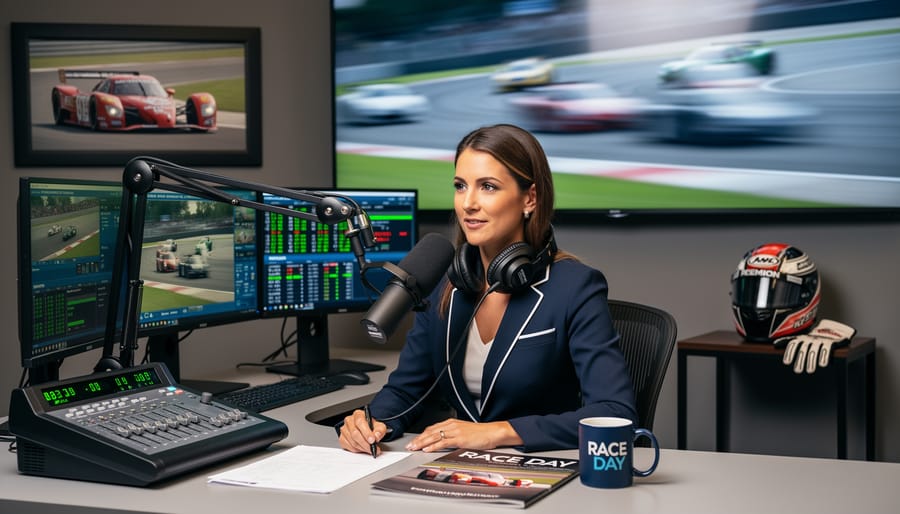
Patrick’s shift from the driver’s seat to the broadcast booth began gradually during her final racing seasons and accelerated after her retirement from full-time competition in 2018. Unlike some retired drivers who step away entirely, she recognized the value of her voice in an industry hungry for authentic perspectives from those who’ve actually pushed the limits at Indianapolis and Daytona.
Her media career started with guest commentary appearances and interviews, where her direct communication style and willingness to offer candid assessments quickly distinguished her from more diplomatic analysts. Patrick launched “Pretty Intense,” a podcast that went beyond racing to explore entrepreneurship, wellness, and personal development, demonstrating her range beyond motorsports commentary. This multifaceted approach helped her build a broader media platform while maintaining credibility within racing circles.
The transition to serious motorsports analysis came through various broadcasting opportunities, including NASCAR coverage and IndyCar commentary roles. Her insights carried weight because she’d lived the experiences she discussed: the physics of drafting at superspeedways, the mental demands of oval racing, and the strategic calculations that separate podium finishes from also-ran performances. Former drivers bring technical depth that pure journalists cannot match, explaining not just what happened on track but why drivers made specific decisions in split-second situations.
Patrick’s comfort with modern motorsport media tech and digital platforms expanded her reach beyond traditional television. She built a social media presence that connected directly with fans while maintaining professional broadcasting relationships. This dual approach became increasingly valuable as racing coverage evolved from purely linear television to multi-platform experiences.
Her path illustrated a broader trend: retired drivers leveraging their expertise to shape how fans understand the sport. The perspective she brought to race coverage came from genuine experience navigating team politics, equipment limitations, and the psychological pressure of competing at the highest levels, context that enriches technical analysis and makes complex racing dynamics accessible to casual viewers.
The Canadian Connection: Why This Matters North of the Border
Canadian motorsports fans have always maintained a distinct relationship with racing that bridges both Formula 1 and IndyCar, creating a unique perspective that sets them apart from audiences elsewhere. While F1 captures the global glamour and technological pinnacle of motorsport, IndyCar holds special significance here as North American open-wheel racing, with historic events like the Honda Indy Toronto and strong Canadian driver representation over the decades.
This dual allegiance means figures like Danica Patrick resonate differently with Canadian viewers than they might with purely F1-focused audiences. Patrick’s IndyCar success, particularly her breakthrough victory and consistent presence in a series that Canadian fans could watch regularly, established her credibility long before any F1 broadcasting role emerged. When she transitioned to media, she brought that North American racing perspective that Canadian viewers already trusted.
The way Canadians consume F1 content adds another layer to this connection. With TSN and RDS carrying F1 coverage domestically, many dedicated fans still seek out Sky Sports streams or international broadcasts for alternative commentary perspectives. Patrick’s potential absence from Sky Sports matters because Canadian audiences often compare broadcast approaches, and they appreciate voices who understand the broader motorsports landscape beyond F1’s European focus.
This cross-series awareness has deep roots. Canadian racing programs have historically prepared drivers for various disciplines, creating fans who follow talent across series rather than remaining loyal to a single championship. That’s why someone with Patrick’s IndyCar pedigree commenting on F1 carried weight with Canadian viewers who understood what she accomplished at the highest levels of open-wheel racing, even if it wasn’t in grand prix cars.
Women in Motorsports Broadcasting Today
The landscape of women in motorsports broadcasting has evolved considerably over the past decade, though the industry still has substantial ground to cover. Today’s F1 coverage includes more female voices than ever before, with Sky Sports employing Natalie Pinkham and Rachel Brookes in prominent pitlane and presenting roles, while former driver Naomi Schiff joined F1’s official broadcast team as an analyst. This progress extends across racing series globally, creating a more representative media environment for fans who have long called for diverse perspectives.
Behind the camera, the shift is equally significant but less visible. Production teams at major broadcasters now include female directors, producers, and content strategists who shape how millions of viewers experience race weekends. The technical expertise required for motorsports broadcasting, understanding telemetry, race strategy, and engineering nuances, matters more than gender, yet the industry historically gatekept these positions. That’s changing, slowly but measurably.
Notable women currently bringing expertise to motorsports coverage include:
- Natalie Pinkham and Rachel Brookes (Sky Sports F1 pitlane reporters and presenters)
- Naomi Schiff (F1 TV analyst and former racing driver)
- Rosanna Tennant (Sky Sports F1 presenter)
- Emma Davies (F1 broadcasting and Channel 4 F1 host)
- Jennie Gow (BBC Radio 5 Live F1 correspondent)
- Ruth Buscombe (former Alfa Romeo strategist, now broadcaster)
- Jamie Little (NBC Sports IndyCar and NASCAR pit reporter)
For Canadian audiences consuming F1 through TSN and other platforms, these voices represent crucial credibility. Motorsports fans want knowledgeable commentary regardless of who delivers it, but diverse broadcasting teams bring different analytical angles and questions that enrich coverage. A pitlane reporter who understands the specific challenges women face in paddock access asks different questions than someone who has never navigated those dynamics.
The importance extends beyond representation for its own sake. Motorsports broadcasts shape how new fans understand racing, what they value, and who they see as belonging in this space. When young Canadian girls see women explaining DRS systems or debating tire strategies with authority, it normalizes their own interest in engineering and racing. The pipeline from fan to participant, whether as driver, engineer, or journalist, strengthens when the visible faces of the sport reflect its actual diversity.
What This Means for the 2026 F1 Season Coverage

Sky Sports’ decision to proceed without Patrick shifts the dynamics for viewers accustomed to former driver insights during race weekends. The network’s commentary team will rely on its established roster of analysts and pit reporters to deliver technical breakdowns and paddock perspectives throughout the season. For Canadian audiences, this represents one piece of a broader broadcasting puzzle.
Options for Canadian F1 viewing extend well beyond Sky Sports alone. TSN maintains its longstanding Formula 1 broadcast partnership, delivering all race weekends with dedicated coverage tailored to North American time zones. RDS provides French-language F1 programming for Quebec viewers. F1 TV Pro offers direct access to all sessions with multiple commentary options, onboard cameras, and race data overlays that appeal to fans seeking granular control over their viewing experience.
The 2026 F1 championship introduces new technical regulations alongside a twenty-four race calendar, meaning coverage quality matters more than individual commentator changes. What remains consistent across broadcasters is access to the same world feed, timing data, and team radio communications that form the backbone of race coverage.
Canadian fans have historically adapted to personnel shifts across various motorsports broadcasts. The focus returns to circuit action, driver performances, and championship battles rather than commentary booth composition. Alternative voices continue emerging through podcasts, YouTube channels, and social media platforms where former drivers and industry insiders provide supplementary analysis between race weekends. The content ecosystem surrounding Formula 1 has diversified considerably, offering fans multiple entry points regardless of traditional broadcast lineups.
Danica Patrick’s absence from Sky Sports’ F1 coverage this season marks a notable shift in motorsports broadcasting, but her broader impact on racing and media remains undeniable. Her career trajectory, from breaking barriers as the most successful woman in American open-wheel racing to building a multifaceted media presence, demonstrated that diverse voices strengthen motorsports journalism. The announcement doesn’t diminish her legacy; it simply reflects the dynamic nature of broadcast partnerships and evolving media landscapes.
For Canadian racing fans, this development serves as a reminder of how fragmented modern motorsports coverage has become. Quality commentary and insightful analysis matter regardless of which personalities deliver it. As F1 continues expanding its global reach, Canadian viewers have more options than ever to access race coverage through various platforms and broadcasters, each offering different perspectives and expertise.
The evolving landscape of F1 media means today’s lineup won’t necessarily be tomorrow’s. What remains constant is the need for authentic voices who understand racing at its core and can translate that expertise into compelling storytelling. Patrick proved that former drivers bring irreplaceable credibility to the broadcast booth, and her influence on motorsports media will extend far beyond any single season’s coverage decisions.