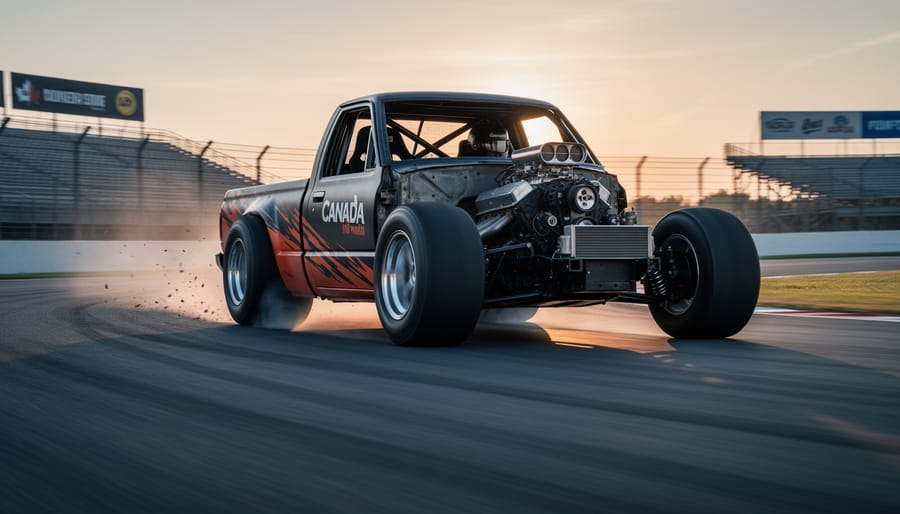
Truck racing remains one of the most visceral forms of motorsport you can witness in Canada, where massively modified pickups and commercial trucks thunder around road courses at speeds that defy their utilitarian origins. These aren’t your neighbor’s weekend haulers. Purpose-built racing trucks feature gutted interiors, roll cages, racing suspensions, and engines pushing 400-plus horsepower, transforming everyday workhorses into legitimate racing machines that corner, brake, and accelerate with surprising agility.
The discipline occupies a unique space in Canadian motorsports. While NASCAR and IndyCar grab mainstream attention, truck racing appeals to enthusiasts who appreciate the engineering challenge of making heavy, high-center-of-gravity vehicles competitive on technical circuits. The sound alone is distinctive: deep-throated V8s and turbocharged diesels creating a rumble that resonates differently than traditional sports cars.
In 2026, truck racing in Canada exists primarily through grassroots series and occasional exhibition events at road courses across the country. You won’t find it at every track on every weekend, but when these events run, they draw dedicated crowds who understand what they’re watching. The series that do operate combine amateur racers, small commercial sponsors, and weekend warriors who’ve built their trucks specifically for competition.
This niche status doesn’t diminish the sport’s appeal. If anything, it creates an accessible entry point for spectators and potential racers alike. Track access is often better than major series, pit walks are common, and the community remains welcoming to newcomers curious about this high-torque, high-drama racing format.
What Makes Truck Racing Different from Traditional Road Racing
Truck racing transforms motorsport physics in ways that immediately grab your attention, even if you’ve attended dozens of conventional road races. These aren’t modified pickup trucks from the dealership down the street, they’re purpose-built racing machines that happen to have truck bodies, and that distinction creates a completely different spectacle on track.
The most obvious difference is sheer mass. Racing trucks typically weigh 1,500 to 2,000 kilograms more than their stock car counterparts, fundamentally changing how they interact with the track. That extra weight means higher momentum entering corners, longer braking zones, and more dramatic visible transfers of weight that you can see from the grandstands. When a pack of trucks hits a corner hard, the body roll and suspension compression are far more pronounced than what you’ll witness in sedan racing, creating a visual drama that appeals to fans who want to see the physics at work.
Here’s what sets truck racing apart from traditional road racing formats:
- Significantly higher centre of gravity requiring different cornering techniques and driver skill sets
- Greater aerodynamic drag from larger frontal areas, making drafting and slipstreaming more critical to race strategy
- More aggressive, contact-tolerant racing culture where bumping is expected rather than penalized
- Louder, deeper engine notes from larger displacement powerplants that many fans find more visceral
- Enhanced visibility for spectators due to taller vehicle profiles, making it easier to follow individual trucks through crowded fields
The handling characteristics demand a specialized driving approach. That higher centre of gravity means trucks are more prone to weight transfer effects, requiring drivers to be smoother on steering inputs while simultaneously being more aggressive with throttle and brake application. It’s a contradictory skill set that separates truck racing specialists from drivers who excel in lower, lighter machinery.
The spectacle factor extends beyond the track action itself. Truck racing delivers a rawness that resonates with Canadian motorsports fans who appreciate blue-collar authenticity. These machines look purposeful and industrial, connecting with audiences differently than sleek sports cars or open-wheel racers. The accessibility of the truck form factor, something closer to what many Canadians actually drive, creates an immediate relatability that traditional road racing sometimes lacks.
The State of Truck Racing in Canada in 2026
Major Series and Events
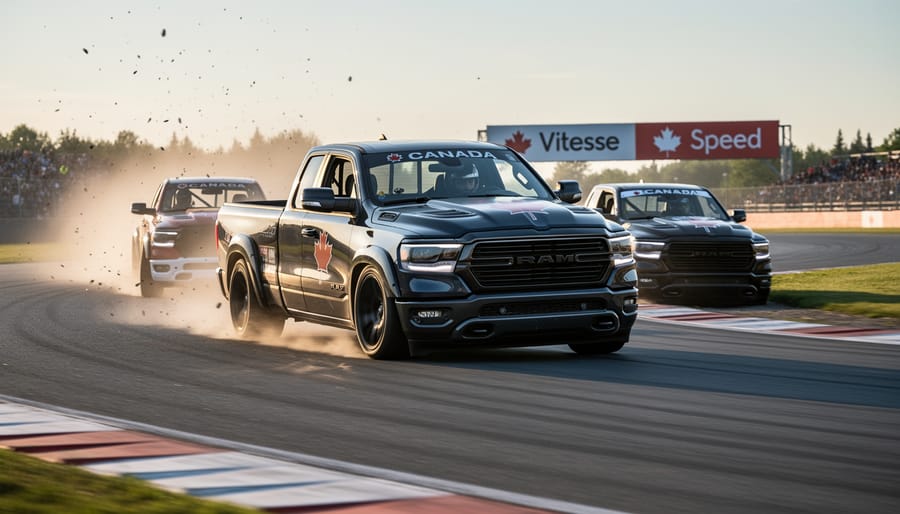
Truck racing opportunities in Canada have evolved considerably, though the landscape remains more fragmented than traditional stock car racing. The 2026 NASCAR Canada Series occasionally features truck-class demonstrations and support races at select venues, particularly during major event weekends at tracks like Canadian Tire Motorsport Park and Circuit ICAR. These appearances give fans a taste of the high-powered truck action familiar to NASCAR Truck Series followers south of the border, though they are not yet a consistent championship component.
Beyond NASCAR’s sporadic truck presence, regional series have filled the void with varying degrees of success. The Ontario Truck Racing Championship operates primarily at short tracks throughout the province, offering a cost-effective entry point for teams and drivers. These events typically run as part of weekend racing packages alongside modified and late model divisions, creating multi-discipline spectacles that draw diverse crowds.
Western Canada has seen grassroots truck racing emerge at facilities like Castrol Raceway in Alberta, where pickup-based racing classes compete in sprint formats. These regional competitions lack the polish and marketing muscle of national series but provide authentic wheel-to-wheel action and accessible competition for local enthusiasts. The challenge for 2026 remains unifying these scattered efforts into a cohesive national platform that can sustain consistent media attention and sponsor interest year-round.
Key Canadian Venues Hosting Truck Racing
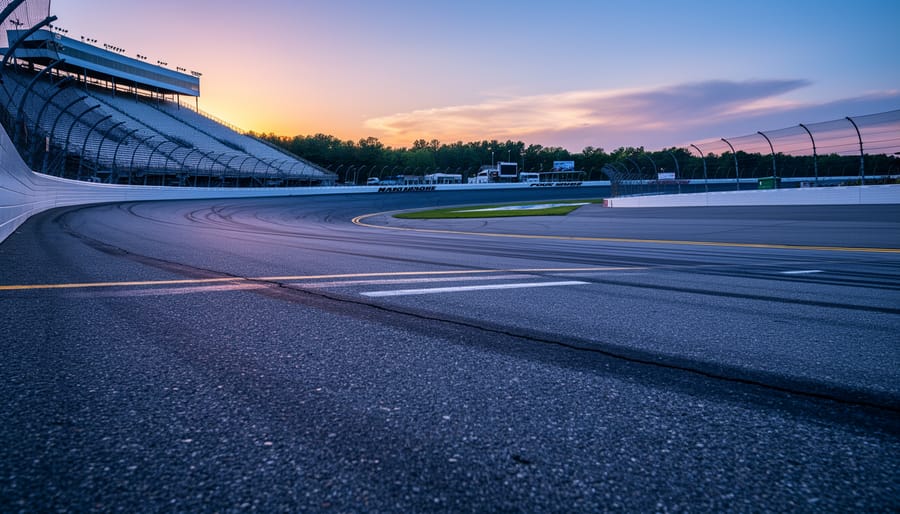
Canada’s truck racing scene centers around a select group of circuits that combine the infrastructure needed for these heavyweight machines with the spectator facilities to showcase the action. The geography of venues reflects both population centers and the sport’s historical roots in specific regions.
Canadian Tire Motorsport Park in Bowmanville, Ontario remains the flagship venue for truck racing in Canada. The 2.459-mile road course hosts the annual Chevrolet Silverado 250 drawing the largest crowds and most competitive fields. The track’s elevation changes and technical corners push both trucks and drivers to their limits, creating memorable racing moments season after season.
| Venue | Location | Track Type | Typical Schedule |
|---|---|---|---|
| Canadian Tire Motorsport Park | Bowmanville, ON | 2.459-mile road course | July-August |
| Circuit Mont-Tremblant | Mont-Tremblant, QC | 2.65-mile road course | June-September |
| Edmonton International Raceway | Wetaskiwin, AB | Multi-configuration facility | May-September |
| Area 27 Motorsports Park | Oliver, BC | 2.3-mile road course | June-August |
Quebec’s Circuit Mont-Tremblant adds a picturesque backdrop to truck racing, with its challenging layout testing braking systems through repeated high-speed corners. Western Canada sees action at Edmonton International Raceway and the newer Area 27 facility in British Columbia’s Okanagan Valley, though truck racing events at these venues occur less frequently than at their eastern counterparts. The concentration of venues in Ontario and Quebec reflects both the sport’s established fan base and the logistical realities of transporting heavy racing equipment across vast distances.
The Trucks: What’s Under the Hood
Canadian truck racing machines blend brute force with precision engineering. These aren’t stock pickups with race numbers slapped on, they’re purpose-built competitors that share little with dealership models beyond basic body shapes.
Most trucks competing in Canadian series run V8 engines displacing between 5.0 and 5.8 litres, producing 400 to 650 horsepower depending on series regulations. NASCAR-sanctioned truck events typically enforce stricter engine specs, while regional series may allow more modification freedom. Fuel injection has largely replaced carburetors in 2026, improving throttle response and reliability during extended races.
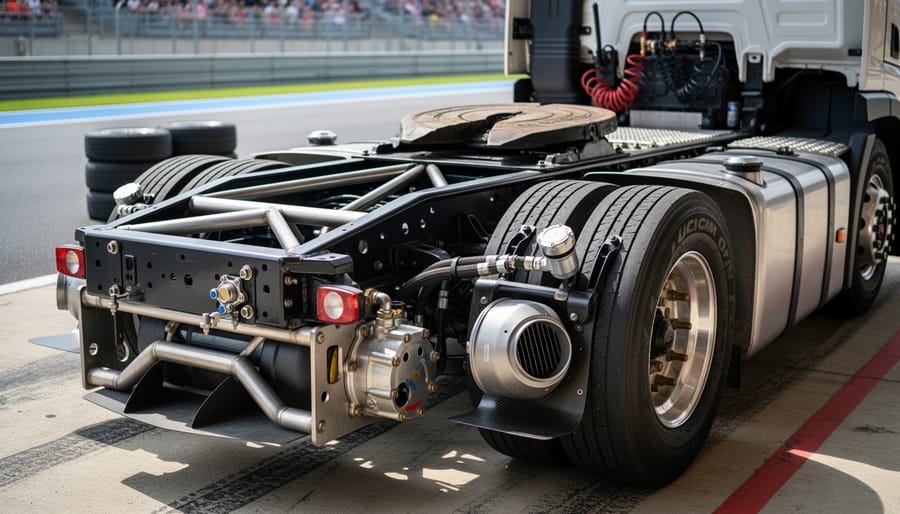
The chassis tells the real story. Tubular steel frames replace factory construction, providing rigid mounting points for suspension components while maintaining crash safety. Custom-fabricated roll cages exceed FIA and NASCAR standards, with reinforced door bars, roof supports, and multiple diagonal braces protecting drivers during impacts. Weight distribution becomes critical, teams add ballast strategically to achieve optimal front-to-rear and left-to-right balance for the specific track configuration.
Suspension systems use coil-over shocks at all four corners, adjustable for compression and rebound damping. Corner weights can be fine-tuned within minutes, allowing teams to adapt to changing track conditions or driver preferences. Racing slicks, not street tires, provide grip, with tire compounds selected based on ambient temperature and track surface characteristics.
Braking systems feature vented rotors, often measuring 330mm or larger, paired with high-performance calipers and braided steel lines. Cooling ducts channel air to rotors during competition, essential when these 1,800-kilogram machines scrub speed lap after lap.
Transmissions vary by series. Four-speed manuals remain common in grassroots racing, while professional series often mandate five or six-speed sequential gearboxes for faster shifts and reduced mechanical sympathy requirements. Racing fuel cells replace factory tanks, positioned for optimal weight distribution while incorporating foam baffling and fire suppression systems.
Canadian Drivers Making Their Mark
Several Canadian drivers have carved out impressive careers in truck racing, demonstrating the country’s depth of motorsports talent and contributing significantly to the sport’s profile both domestically and internationally.
Stewart Friesen stands as perhaps Canada’s most recognizable name in truck racing. The Niagara-on-the-Lake, Ontario native has competed extensively in the NASCAR Craftsman Truck Series, earning multiple victories and consistently running at the front of the field. His success has opened doors for other Canadian drivers eyeing similar opportunities and proved that Canadians can compete at the highest levels of this discipline.
On the regional circuit, drivers like Andrew Ranger have transitioned between various road racing formats, bringing stock car expertise to truck racing events when opportunities arise. These versatile competitors showcase the transferable skills between different racing disciplines and help elevate the quality of competition at Canadian venues.
The 2026 season has also seen younger drivers making noise in developmental truck racing programs. Teams based in Ontario and Quebec have launched talent development initiatives specifically for truck racing, creating pathways for drivers in their late teens and early twenties to gain experience in these powerful machines before potential moves to larger series.
What sets many Canadian truck racers apart is their grassroots background. Unlike some American counterparts who come from well-funded programs, many Canadians work their way up through local short tracks, developing car control skills that translate perfectly to managing heavy, powerful trucks on road courses. This blue-collar approach resonates strongly with fans and adds authenticity to Canada’s truck racing community.
The Fan Experience: Attending a Truck Race in Canada
Walking into a truck racing event in Canada offers a distinct experience from traditional motorsports venues. The accessibility stands out immediately: most Canadian tracks hosting truck races maintain family-friendly pricing, with general admission tickets typically ranging from $25 to $60 depending on the venue and event scale. Children under 12 often enter free or at reduced rates, making it an affordable weekend activity compared to premium racing series.
The paddock access at truck events deserves special mention. Unlike Formula racing or even some stock car series, truck racing maintains a notably open environment. Many venues allow fans to walk through the pits between sessions, getting close looks at the trucks and occasionally chatting with drivers and crew members. This accessibility creates a connection you simply won’t find at higher-tier motorsports events.
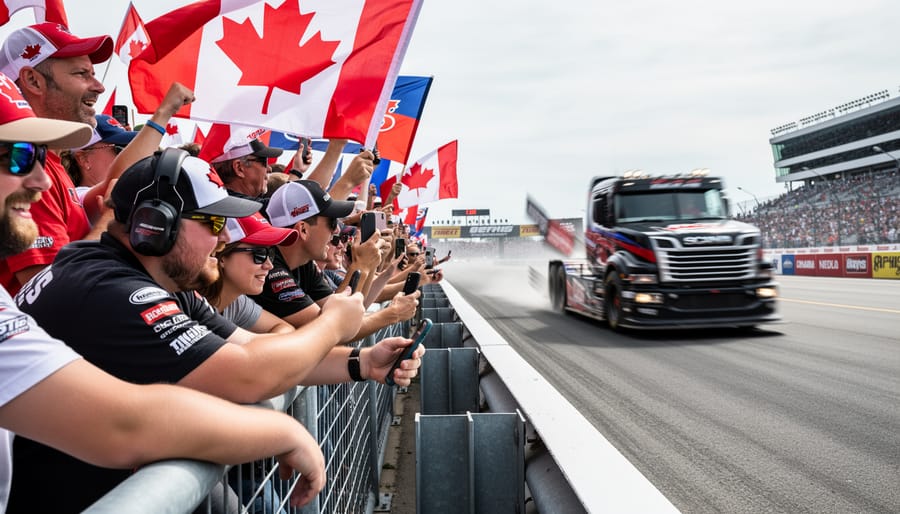
Sound and spectacle define the atmosphere. When a field of modified trucks thunders past, the roar is visceral, a deep rumble that resonates in your chest. The visual impact of these massive machines leaning into corners, sometimes on two wheels during aggressive maneuvers, provides drama that photo galleries can’t capture.
Most Canadian tracks offer viewing from multiple angles. Grandstand seating provides the traditional race-day experience, but many fans prefer the infield areas or turn-specific positions where they can watch specific overtaking zones. Bring hearing protection, especially for kids, as the noise levels during races genuinely warrant it.
Food and amenities vary by track, but expect standard motorsports fare: burgers, poutine at most Canadian venues, and cold drinks. Parking is usually plentiful and reasonably priced. The crowds tend to be knowledgeable and passionate without the sometimes-intense atmosphere of larger racing series, creating a welcoming environment for first-timers.
Challenges and Opportunities for Truck Racing’s Growth
Truck racing in Canada operates in a complex landscape where passionate grassroots support meets significant structural challenges. The sport’s future depends on navigating these obstacles while capitalizing on emerging opportunities that could reshape its trajectory.
Sponsorship remains the most pressing hurdle. Unlike established series that attract major automotive and energy brands, truck racing struggles to secure long-term financial backing. The corporate dollars that might flow to truck racing often get diverted to higher-profile series with guaranteed television exposure. Regional businesses provide crucial support, but scaling operations requires national partnerships that have proven elusive. Teams frequently operate on shoestring budgets, limiting their ability to invest in equipment upgrades or travel to distant venues.
Media coverage presents another barrier. While NASCAR Canada Series events occasionally appear on specialty sports channels, dedicated truck racing receives minimal broadcast attention. Streaming platforms offer potential solutions, but monetizing digital audiences remains challenging for smaller series. Social media has become the primary promotional tool, yet organic reach pales compared to paid advertising budgets available to major motorsports.
- Lower operational costs compared to traditional road racing attract budget-conscious teams and sponsors.
- Unique spectacle and accessibility create strong word-of-mouth promotion and loyal fan bases.
- Growing appetite for diverse motorsports content opens doors for digital and streaming partnerships.
- Trucks resonate with Canadian audiences given the country’s strong pickup culture and commercial vehicle market.
- Limited sponsorship pool forces competition with established series for scarce marketing dollars.
- Minimal mainstream media coverage restricts fan growth and commercial viability.
- Geographic challenges and venue availability increase costs and complicate scheduling.
- Perception as a novelty rather than serious motorsport undermines professional legitimacy.
The opportunities, however, tell a different story. Canada’s robust pickup truck market creates natural synergy with manufacturers who could leverage racing for brand building. Ford, Ram, and Chevrolet each sell hundreds of thousands of trucks annually to Canadian buyers who might connect with racing programs. Demographic shifts also work in truck racing’s favor, as younger audiences seek authentic, accessible motorsports experiences rather than polished corporate events.
Cross-promotion with established road racing weekends offers immediate growth potential. Adding truck races as support events introduces the discipline to existing motorsports fans without requiring standalone promotion. Several Ontario tracks have experimented with this model successfully, drawing curious spectators who return specifically for truck events.
Truck racing occupies a distinctive niche in Canada’s motorsports ecosystem. While it may not command the massive audiences of NASCAR’s premier series or the grassroots appeal of local stock car racing, it delivers something neither can match: the raw, visceral spectacle of multi-ton machines sliding through corners at speeds that defy physics and common sense.
The sport’s future in Canada hinges on continued venue support and sponsor commitment, but the fundamentals are solid. Track promoters recognize truck racing’s crowd-drawing power, drivers bring genuine talent and passion, and fans consistently turn out for the unique show these events provide. As series expand their calendars and new venues explore hosting opportunities, 2026 looks promising for growth.
If you’ve never witnessed truck racing firsthand, you’re missing one of road racing’s most underrated experiences. The sound alone, deep, thunderous exhaust notes that you feel in your chest, makes the trip worthwhile. Check the schedule at Canadian tracks near you, grab a ticket, and discover why those who attend once typically come back. This isn’t motorsports background noise; it’s a front-row seat to controlled chaos that showcases driving skill in its rawest form.