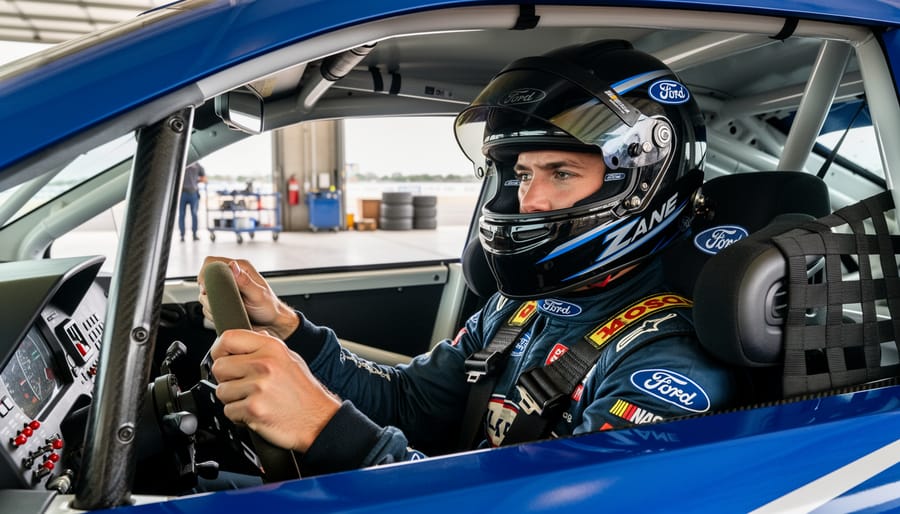
Zane Smith is a 2022 NASCAR Truck Series champion who now competes full-time in the NASCAR Cup Series with Front Row Motorsports, piloting a Ford in what marks a significant step up in his racing career. For Canadian motorsports fans tracking his progression through stock car racing’s premier division, Smith represents one of the sport’s recent graduates moving from championship-winning form in the Truck Series to proving himself against Cup Series veterans. His current season performance includes a ninth-place finish at the Kansas spring race on April 19, 2026, Race 9 of the 36-race Cup schedule, showing the consistency needed to build credibility at NASCAR’s highest level.
Smith’s journey from Truck Series champion to Cup Series competitor offers a clear case study in NASCAR’s developmental ladder system. While many young drivers struggle with the transition to heavier, more powerful Cup cars and a significantly deeper field of competition, Smith’s championship pedigree provides him with the mental framework and racecraft experience to adapt. Front Row Motorsports, his current team, operates as a smaller outfit compared to NASCAR’s powerhouse organizations, which means Smith’s results must be evaluated within that competitive context rather than purely on finishing position.
For Canadian fans looking to follow Smith’s career, understanding where he races and how to access coverage matters as much as knowing his background.
Who Is Zane Smith in NASCAR
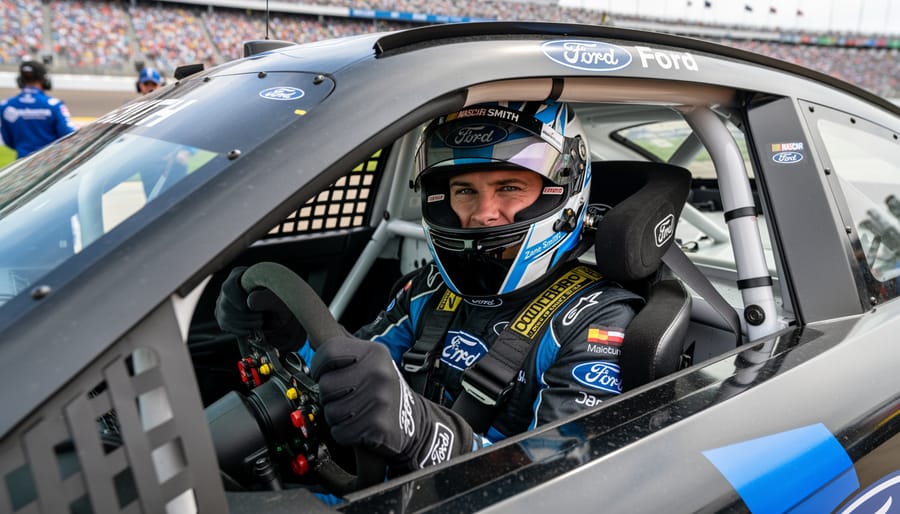
Zane Smith is a NASCAR driver who made his name by winning the 2022 NASCAR Truck Series championship, proving himself as one of the sport’s rising talents in its developmental ranks. That championship season established Smith as a legitimate prospect ready for NASCAR’s higher levels, leading to his progression through the sport’s ladder system.
The California native built his career foundation in NASCAR’s Truck Series, where drivers typically showcase their abilities before advancing to the Xfinity Series and ultimately the Cup Series. Smith’s championship run demonstrated consistency and racecraft against experienced competitors, marking him as a driver worth watching as he climbed through NASCAR’s competitive tiers.
Smith currently competes in the NASCAR Cup Series, the sport’s premier division, driving for Front Row Motorsports in a Ford. This transition represents the typical career arc for successful NASCAR drivers: excel in the Truck Series, then tackle the significantly more demanding Cup Series competition. The jump from Truck Series champion to Cup Series regular puts Smith among NASCAR’s elite, racing against the sport’s biggest names on the same tracks each weekend.
His significance lies not just in his championship pedigree but in representing the next generation of NASCAR talent. For Canadian motorsports fans following the sport, Smith embodies the pathway young drivers take from lower series success to competing for wins at NASCAR’s highest level. His 2026 Cup Series campaign with Front Row Motorsports offers a chance to watch a proven champion develop against top-tier competition.
What Zane Smith Does: Racing at NASCAR’s Highest Level
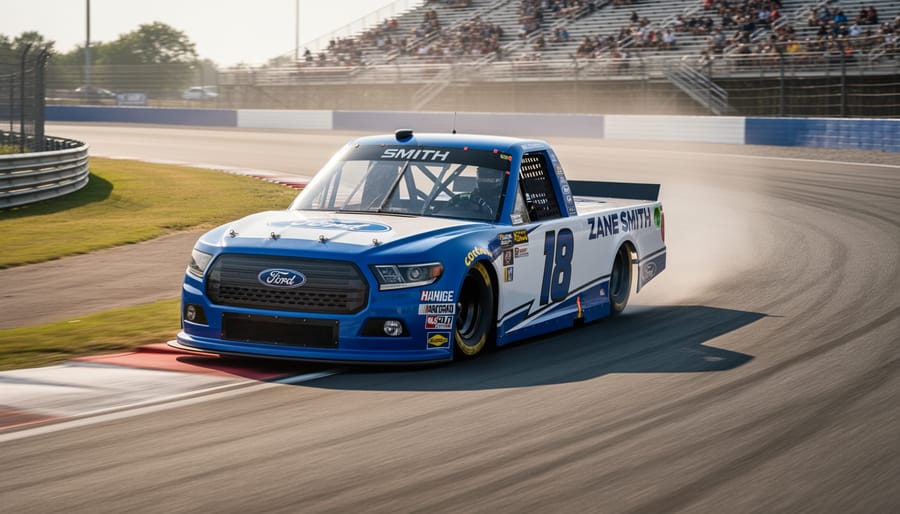
Zane Smith competes weekly in the NASCAR Cup Series, the premier level of stock car racing in North America, where he faces the sport’s most demanding schedule and toughest competition. As a Cup Series driver for Front Row Motorsports, Smith pilots a Ford Mustang against field depths that include multi-car powerhouse teams and former champions, racing for points, prize money, and career progression at tracks across the United States.
The Cup Series presents a gruelling 36-race points schedule that runs from February through November, testing drivers physically and mentally across an exhausting calendar. Smith must adapt to drastically different track types throughout the season: high-speed superspeedways like Daytona and Talladega where cars reach 200 mph in tight packs, technical road courses that demand precise braking and cornering, short tracks under a mile where tempers flare in close quarters, and mile-and-a-half intermediate ovals like Kansas where he secured his 9th-place finish in April 2026. Each venue requires distinct driving techniques, car setups, and race strategies.
Beyond the cockpit, Smith’s responsibilities extend throughout race weekends and between events:
- Participating in practice and qualifying sessions to dial in car performance for race conditions
- Collaborating with his crew chief and engineers on setup adjustments, tire strategy, and pit-stop execution
- Providing detailed feedback on car handling to guide mechanical changes between runs
- Fulfilling sponsor appearances, media interviews, and fan engagement commitments that fund the operation
- Maintaining physical fitness and mental preparation to endure three-to-four-hour races in extreme cockpit temperatures
At Front Row Motorsports, Smith works within a smaller organizational structure compared to NASCAR’s super-teams, meaning he and his crew must maximize limited resources while competing against better-funded rivals. His Ford equipment connects him to the manufacturer’s technical support network, but race-day success depends on his ability to extract maximum performance from the package through skilled driving, smart race management, and capitalizing on strategic opportunities when faster cars falter.
Zane Smith’s 2026 NASCAR Cup Series Performance
Zane Smith’s transition to full-time Cup Series competition in 2026 shows a driver building experience at NASCAR’s highest level. Through the first quarter of the season, his results reflect the learning curve typical for a championship-caliber Truck Series driver stepping up to face the sport’s elite week after week.
His strongest verified performance came at Kansas Speedway on April 19, 2026, where Smith brought his Front Row Motorsports Ford home in 9th place. This top-ten finish in Race 9 of the 36-race points schedule demonstrated his ability to compete with established Cup Series veterans on a 1.5-mile intermediate track, a crucial skill given NASCAR’s calendar features multiple similar speedways. The result came at a track where track position and tire management separate contenders from backmarkers, suggesting Smith is adapting to the strategic depth Cup Series racing demands beyond raw speed.
| Race | Date | Track | Finish Position |
|---|---|---|---|
| Early Season | March 8, 2026 | Phoenix Raceway (1.0-mile) | Not specified |
| Race 9 of 36 | April 19, 2026 | Kansas Speedway | 9th |
Earlier in the season, Smith competed at the March 8 Phoenix Raceway event, a unique 1.0-mile dogleg oval that rewards precision and patience. While his finishing position there isn’t part of the verified record, the race represented another opportunity to tackle a completely different track configuration, continuing his education across NASCAR’s diverse venue roster.
For Canadian fans tracking Smith’s progression, his 2022 Truck Series championship credentials matter less than what he accomplishes against Cup Series competition. The Kansas result shows he can deliver respectable finishes, but sustained success requires stringing together consistent performances across the remaining 27 races. Road courses like the Michigan road-course challenge will test different skills than Kansas and Phoenix demanded, adding layers to evaluating his development.
Smith’s 2026 campaign matters for Front Row Motorsports too. A driver who can reliably finish inside the top 15 and occasionally crack the top ten brings value to a smaller team working to close the gap on NASCAR’s powerhouse organizations.
Front Row Motorsports and Smith’s Equipment
Front Row Motorsports represents Smith’s entry point into NASCAR’s top division, positioning him with an organization that operates outside the sport’s elite mega-teams. The North Carolina-based outfit fields Ford Mustangs in Cup Series competition, giving Smith factory-backed equipment from one of NASCAR’s three major manufacturers. While Front Row doesn’t command the multi-car resources of juggernauts like Hendrick Motorsports or Joe Gibbs Racing, the team has carved out a reputation for maximizing smaller budgets and occasionally punching above its weight class.
Canadian fans should understand that Front Row typically runs one or two full-time Cup Series entries, competing against teams that field four or more cars with significantly larger engineering staffs and testing budgets. This creates a different competitive dynamic. Smith’s 9th-place finish at Kansas in April 2026 demonstrates what’s possible when execution meets opportunity, a strong result for a single-car operation at a 1.5-mile intermediate track where technical advantages matter.
The Ford partnership provides Smith with the same basic platform that powers race-winning teams, though development resources and week-to-week adjustments differ considerably from what top-tier operations can deploy. Front Row focuses on consistency and capitalizing on situations where attrition or strategy creates openings, rather than outright speed dominance.
For Canadian motorsports followers accustomed to Formula 1’s clear hierarchy between constructor teams, NASCAR’s structure allows smaller operations like Front Row to compete directly against the sport’s heavyweights every weekend. Smith drives the same 36-race schedule as champions and faces identical competition, just with fewer organizational resources backing his effort. His championship pedigree from the Truck Series suggests he’s capable of extracting maximum performance from the equipment available.
How Canadian Fans Can Follow Zane Smith’s NASCAR Racing
Canadian motorsports fans have multiple ways to follow Zane Smith’s Cup Series season throughout the 36-race schedule. TSN holds primary NASCAR broadcast rights in Canada, airing most Cup Series races live, while select events also appear on RDS for francophone viewers. Sportsnet occasionally carries marquee races, particularly playoff events in the fall.
For streaming options, TSN Direct provides access to the full race calendar for cord-cutters, while NASCAR’s own TrackPass service offers live timing data, in-car cameras, and race radio though full live race broadcasts are regionally restricted. Traditional cable subscribers with TSN packages can stream races through the TSN app. Race start times typically fall between 1 p.m. and 3 p.m. Eastern on Sundays, making them accessible for Canadian afternoon viewing.
Beyond watching races, Canadians can stay connected to Smith’s season through several channels:
- NASCAR’s official app and for live race scoring, points standings, and instant results from all 36 Cup Series events
- Zane Smith’s verified social media accounts on X (formerly Twitter) and Instagram for team updates, race-day content, and behind-the-scenes access
- Front Row Motorsports’ team channels for technical insights, crew perspectives, and race weekend previews
- Fantasy NASCAR platforms like NASCAR Fantasy Live, where Canadian fans can build lineups and compete throughout the season
- Race highlight packages posted to NASCAR’s YouTube channel within hours of each checkered flag
The NASCAR season runs February through November, concentrating most races on Sundays with occasional Saturday night events. For Canadians considering attending races in person, our Talladega tips for Canadians and Nashville track guide provide border-crossing logistics and venue-specific advice for popular tracks within driving distance.
Understanding NASCAR Cup Series Racing for New Fans
The NASCAR Cup Series operates on a 36-race schedule running from February to November, with each race awarding points based on finishing position. The winner receives 40 points, second place gets 35, and the scale continues down to one point for 40th place. Stage racing breaks most races into three segments, awarding bonus points at the end of stages one and two to drivers finishing in the top ten, which adds strategic elements beyond simply crossing the finish line first.
After 26 regular-season races, the top 16 drivers in points advance to the playoffs, a ten-race elimination format that crowns the champion at the final race in Phoenix. Every three races, the field shrinks by four drivers until only four competitors battle for the title in the season finale. Smith’s ninth-place finish at Kansas in April 2026 earned him solid points during the regular season, the foundation for any playoff hopes.
How does NASCAR scoring work?
Drivers earn points based on finishing position (40 for first down to 1 for 40th) plus bonus points for stage wins and leading laps. The points accumulate across 36 races to determine championship eligibility and playoff seeding.
What’s the difference between Truck Series and Cup Series?
Cup Series is NASCAR’s top tier with the most powerful cars, biggest budgets, and highest competition level. The Truck Series serves as a development league where drivers like Smith earned their championship before moving up.
What makes different tracks challenging?
Tracks vary dramatically in length, banking, and surface. Kansas is a 1.5-mile intermediate oval with progressive banking, while Phoenix is a flat, tight one-mile track requiring different setups and driving styles.
Track characteristics significantly impact racing strategy and outcomes. Short tracks like the Richmond Raceway overview emphasizes close-quarters battling, while superspeedways demand drafting expertise. Road courses test braking and turning skills absent on ovals. Canadian fans watching Smith compete will notice how his performance fluctuates across these diverse venues, reflecting the versatility Cup Series drivers must develop to contend for wins across NASCAR’s varied calendar.