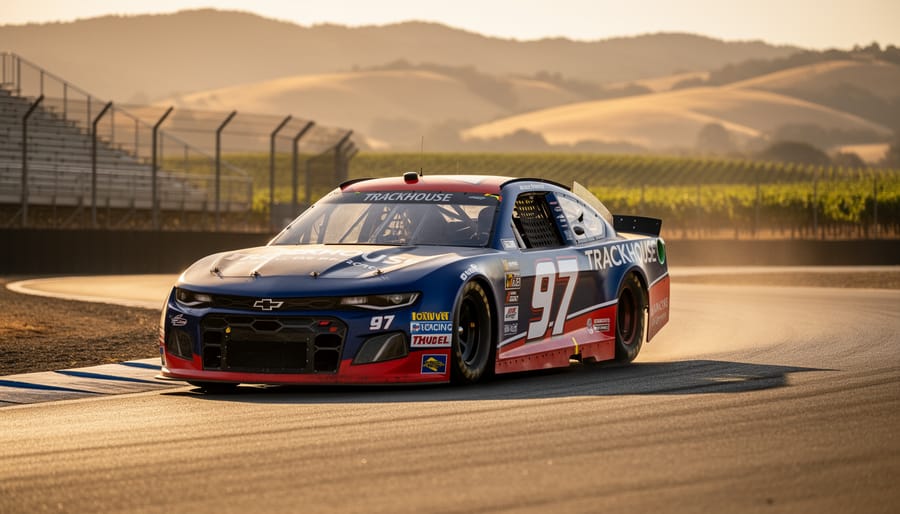
Shane van Gisbergen made NASCAR history on June 28, 2026, when he won the Cup Series race at Sonoma Raceway, proving that his stunning debut victory in 2023 was no fluke and cementing his status as one of road racing’s most formidable talents. The New Zealand-born driver, wheeling the No. 97 Trackhouse Racing entry, conquered the technical 12-turn circuit in wine country to claim what stands as one of the most significant wins by an international driver in modern NASCAR competition.
For Canadian motorsport fans watching the rise of global talent in North American racing, van Gisbergen’s Sonoma triumph offers a compelling narrative. Here’s a driver who dominated Australia’s Supercars Championship for years, capturing three series titles and becoming a household name in the Southern Hemisphere, before making the audacious leap to NASCAR’s top tier. His road racing pedigree translates remarkably well to circuits like Sonoma, where precision, late-braking confidence, and the ability to manipulate a heavy stock car through elevation changes separate contenders from pretenders.
This victory matters beyond the trophy. It signals that NASCAR’s ongoing internationalization isn’t just about filling grids but about genuine competition at the highest level. Van Gisbergen’s success validates the road racing specialists who’ve long argued that stock car competition on road courses demands a skill set distinct from oval racing, and that drivers from diverse motorsport backgrounds can excel when given proper equipment and adaptation time.
The Sonoma Victory: Breaking Down Van Gisbergen’s Win
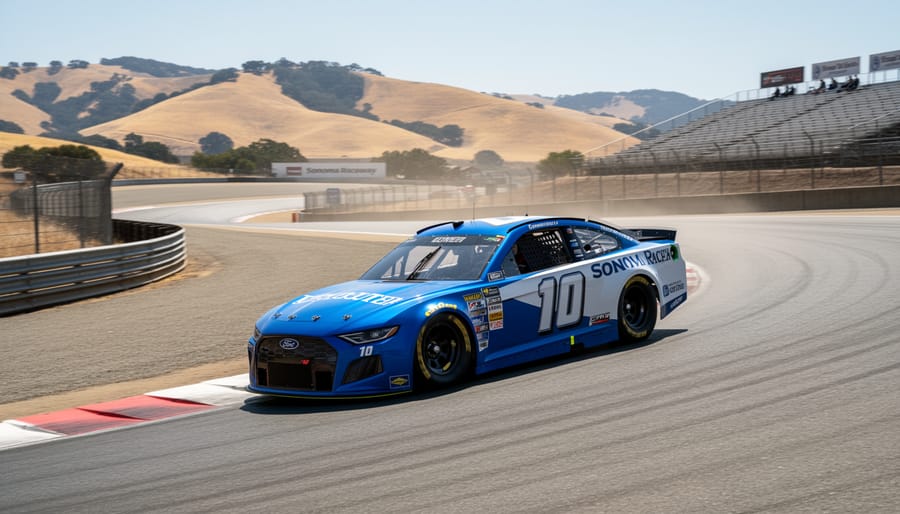
On a sun-drenched Sunday afternoon at Sonoma Raceway, Shane Van Gisbergen turned heads across the motorsports world. The No. 97 Trackhouse Racing driver claimed victory on June 28, 2026, in a performance that showcased exactly why his transition from Supercars to NASCAR has generated so much excitement. This wasn’t just another win, it was a statement that Van Gisbergen’s road racing pedigree translates perfectly to NASCAR’s most technical circuits.
Sonoma Raceway presents a unique challenge in the NASCAR calendar. The 1.99-mile road course winds through Northern California wine country with elevation changes of more than 160 feet, ten turns that range from tight hairpins to sweeping corners, and virtually no margin for error. Unlike the high-speed ovals that dominate the schedule, Sonoma demands precision braking, late-apex cornering, and the kind of spatial awareness Van Gisbergen developed during his years competing on street circuits and permanent road courses in Australia and New Zealand.
What made this victory particularly impressive was how Van Gisbergen and the No. 97 team managed race strategy throughout the afternoon. Road course races often turn on pit strategy and track position rather than raw speed, and Trackhouse Racing executed flawlessly. Van Gisbergen’s ability to conserve his equipment while maintaining competitive lap times, a skill honed through decades of endurance racing, proved crucial as the race entered its final stage.
The win carries significant weight for Van Gisbergen’s NASCAR trajectory. While he arrived in the Cup Series with a reputation as a road course specialist, converting that reputation into actual victories validates both his decision to race full-time in America and Trackhouse Racing’s investment in international talent. It’s one thing to show speed in practice or qualify well; it’s entirely another to execute under pressure against drivers who’ve spent their entire careers mastering NASCAR’s unique racing style.
For casual fans unfamiliar with the nuances of road racing in stock cars, this victory demonstrates that success in NASCAR requires more than knowing how to turn left. Sonoma rewards drivers who can threshold brake into corners, manage tire wear across long stints, and read traffic patterns that change lap by lap.
From Supercars Champion to NASCAR Contender: Van Gisbergen’s Journey
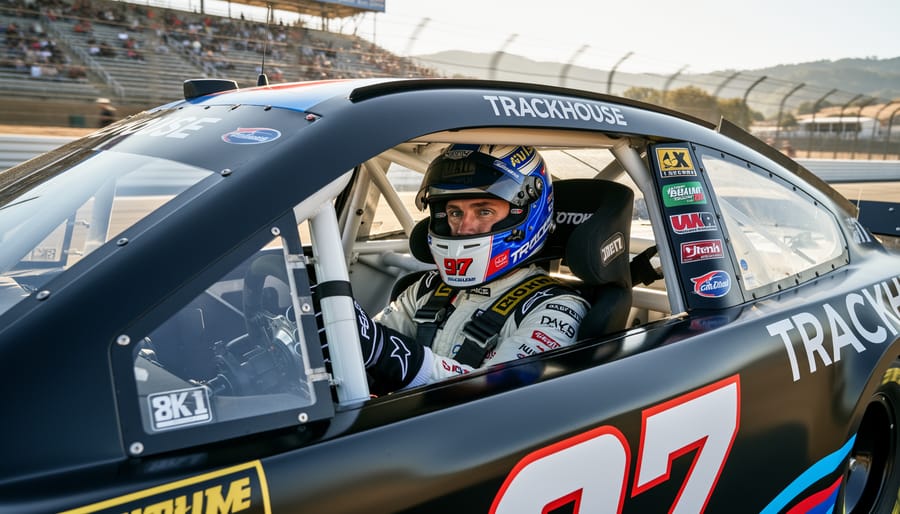
Shane Van Gisbergen didn’t arrive in NASCAR as an unknown commodity. The New Zealand driver spent over a decade dominating Australia’s Supercars Championship, securing three titles (2016, 2020, and 2021) behind the wheel for Red Bull Ampol Racing. His trophy cabinet includes multiple Bathurst 1000 victories, the crown jewel of Australasian touring car racing, and a reputation as one of the Southern Hemisphere’s most naturally talented drivers.
What set Van Gisbergen apart in Supercars wasn’t just raw speed but an uncanny ability to read street circuits and technical road courses. Unlike oval-heavy NASCAR, Supercars runs almost exclusively on permanent road courses and temporary street tracks through cities like Adelaide and Newcastle. These venues demand surgical precision through complex corner sequences, late braking zones, and constantly shifting grip levels. Van Gisbergen made his name by extracting lap time from sections where other drivers left hundredths on the table.
When he made the leap to NASCAR in 2023, skeptics questioned whether those skills would translate. The cars handle differently, the competition level is arguably deeper, and adapting to American stock car racing culture presents its own challenges. But Van Gisbergen’s background proved to be an asset rather than a liability. His first NASCAR start, a Craftsman Truck Series race on the Chicago Street Course in July 2023, ended in a stunning debut victory that turned heads throughout the garage.
That win wasn’t a fluke. Road racing requires spatial awareness, trail braking technique, and the ability to maximize corner exit speed while managing tire degradation over long stints. Van Gisbergen spent years honing these skills against world-class competition in touring cars that weigh less but generate comparable power to Cup Series machines. When NASCAR visits tracks like Sonoma, Circuit of the Americas, or Watkins Glen, he’s not learning a new discipline, he’s returning to familiar territory where muscle memory and instinct take over.
Why Canadian Motorsports Fans Should Pay Attention

Van Gisbergen’s breakthrough at Sonoma should resonate strongly with Canadian motorsports enthusiasts for several reasons that extend beyond the spectacle of a single race victory. His success represents a shift in NASCAR’s traditional driver pipeline and highlights skills honed on circuits that share characteristics with Canada’s road courses.
For Canadians who’ve followed Supercars racing through streaming services or motorsports publications, Van Gisbergen’s name carries significant weight. His three championship titles and dominant performances at Mount Panorama aren’t distant achievements, they’re proof that drivers from outside America’s oval racing tradition can compete at NASCAR’s highest level. This crossover appeal matters in a market where racing fans increasingly consume content from multiple series rather than following a single championship exclusively.
The timing of his Sonoma victory also coincides with NASCAR’s ongoing expansion of road course events on the Cup Series calendar. As the series explores international growth opportunities, Van Gisbergen’s visibility strengthens the business case for future races in Canada, where road racing infrastructure already exists and fans appreciate technical driving over pure speed.
His presence in NASCAR also benefits Canadian drivers aspiring to reach the Cup Series. When international talent succeeds at this level, it challenges the perception that only drivers who’ve progressed through American grassroots racing programs can compete. Van Gisbergen’s path from Supercars to NASCAR provides an alternative template that Canadian road racing specialists might eventually follow, particularly those with experience in sports car championships or touring car series that emphasize similar driving dynamics.
Trackhouse Racing’s Gamble on International Talent
Trackhouse Racing’s approach to driver recruitment represents a fundamental shift in how NASCAR teams think about talent. When team owner Justin Marks founded Trackhouse in 2020, he made it clear the organization wouldn’t follow conventional wisdom about who belongs in a Cup Series car. The decision to bring Shane Van Gisbergen into the fold validates that philosophy in spectacular fashion.
The team’s international focus extends beyond Van Gisbergen. Trackhouse has actively pursued drivers with credentials from global racing series, recognizing that motorsports excellence transcends geographic boundaries. This strategy challenges NASCAR’s traditional reliance on drivers who came up through American short tracks and regional series. By looking at proven champions from Supercars, Formula 1, and other international championships, Trackhouse gains access to a talent pool most teams ignore.
NASCAR’s evolution depends on embracing world-class talent regardless of where they developed their skills, and Trackhouse is proving that international champions can compete at the highest level of stock car racing.
Van Gisbergen’s success demonstrates the viability of this model. His road racing expertise, honed through years in Supercars competition, translates directly to NASCAR’s road course events. The skills required to manage weight transfer, brake late, and find optimal racing lines don’t change based on geography.
Whether other teams follow Trackhouse’s lead remains uncertain, but the competitive pressure is building. When an international driver wins a Cup Series race, it forces rival organizations to reconsider their talent evaluation criteria. The traditional path through NASCAR’s developmental series still produces capable drivers, but Trackhouse has shown there’s another route to success.
The implications extend beyond individual driver signings. As NASCAR continues expanding its schedule with more road courses and potentially international events, teams with global rosters may hold distinct advantages. Trackhouse positioned itself ahead of this curve, and Van Gisbergen’s victory at Sonoma vindicates their forward-thinking approach to team building in modern NASCAR.
What’s Next: Van Gisbergen’s 2026 Season and Beyond
Van Gisbergen’s Sonoma triumph marks just the beginning of what could be a transformative NASCAR career, but his path forward depends heavily on the circuit calendar. The Cup Series schedule includes several road courses where his Supercars pedigree gives him a legitimate competitive edge, tracks like Watkins Glen, the Charlotte Roval, and the Indianapolis Motor Speedway road course all play to his strengths. These venues reward the precise throttle control, late braking confidence, and racecraft he honed through years of V8 Supercar competition.
For Canadian fans wanting to follow his progress, tracking NASCAR’s road course weekends offers the best opportunity to see Van Gisbergen compete at his highest level. His rookie season with the No. 97 Trackhouse Racing team will inevitably include a learning curve on oval tracks, where NASCAR’s unique dynamics differ significantly from anything in his background. Patience is essential, success on 1.5-mile speedways and superspeedways won’t come as quickly as it did at Sonoma.
Long-term, Van Gisbergen’s ceiling in NASCAR depends on factors beyond raw talent. Can he master oval racing to become a consistent threat across all track types? Will Trackhouse provide the resources and support to develop a championship-caliber program around him? His age, he turned 35 in 2025, means he has a realistic window of perhaps five to seven peak competitive years in Cup Series competition.
The broader question is whether his success opens doors for more international talent in NASCAR’s top tier. If Van Gisbergen continues winning and builds a fanbase that extends beyond traditional American stock car racing audiences, he could fundamentally reshape how teams scout and develop drivers.
The Road Racing Advantage: Why Some Drivers Excel on Courses Like Sonoma
Road course racing demands a fundamentally different skill set than NASCAR’s traditional oval tracks. While ovals reward consistency, drafting strategy and the ability to maintain speed through long, sweeping turns, tracks like Sonoma require constant gear changes, precision braking and the ability to navigate tight corners where finding the optimal racing line separates winners from also-rans.
Drivers with international backgrounds often excel at venues like this challenging road course because they’ve spent careers mastering these exact techniques. In series like Supercars, Formula 1 and sports car racing, competitors race almost exclusively on road circuits, developing instincts that take oval-focused drivers years to acquire. The muscle memory for threshold braking into hairpins, managing weight transfer through elevation changes and maximizing exit speed from slow corners becomes second nature.
- Apex
- The innermost point of a corner where the car comes closest to the inside edge of the track, representing the ideal geometric line through the turn.
- Trail Braking
- A technique where drivers maintain brake pressure while turning into a corner, shifting weight to the front tires for better grip and later turn-in points.
- Racing Line
- The fastest path around a circuit, typically involving entering corners wide, clipping the apex, and exiting wide to maximize speed.
- Elevation Change
- Vertical variations in track surface that affect car balance, braking points and cornering dynamics, requiring constant driver adaptation.
Sonoma amplifies these challenges with its dramatic elevation changes and technical corner combinations. The track drops over 160 feet from its highest to lowest points, meaning drivers must constantly recalibrate their approach as gravity shifts weight distribution. What works in Turn 2 at the top of the hill feels completely different from the uphill braking zone entering Turn 7.