
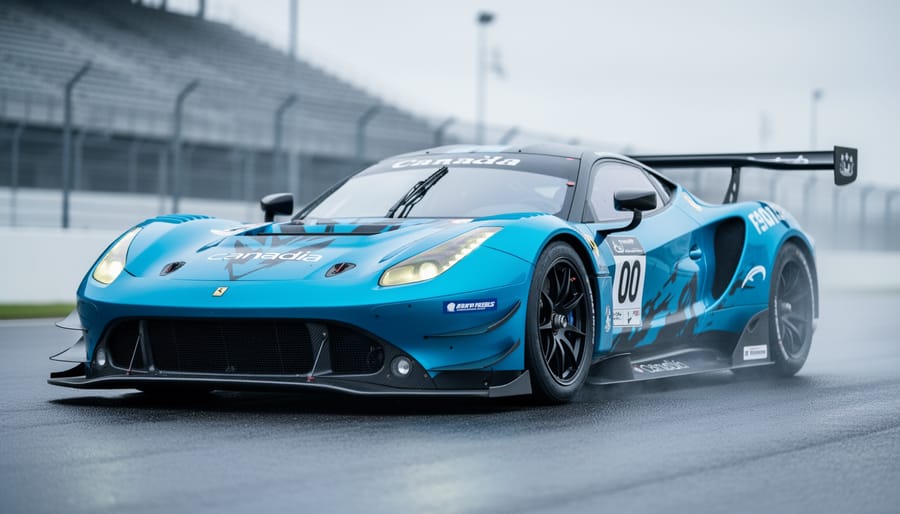
Capture race car images with precision by using AI-powered background removal tools that eliminate distracting track elements, crowds, and environmental clutter in seconds rather than hours of manual editing. Modern AI algorithms specifically trained on automotive imagery can distinguish between complex elements like motion blur, sponsor decals, and aerodynamic components while preserving fine details that traditional selection tools often miss.
Canadian motorsports photographers working with series like the Canadian Tire Motorsport Park events or Formula 1’s Montreal Grand Prix face unique challenges: variable weather conditions create inconsistent backgrounds, while sponsor requirements demand clean, professional imagery for marketing materials. AI background removal addresses these needs by processing hundreds of shots from a race weekend efficiently, allowing photographers to deliver polished content to racing teams within tight deadlines.
The technology works by analyzing pixels to identify subject boundaries, then separating foreground vehicles from backgrounds using machine learning models trained on millions of automotive images. This process maintains critical details like brake dust, tire smoke, and carbon fiber textures that define high-performance racing photography. Whether creating promotional materials for automotive clients or building portfolio pieces that showcase Canadian racing culture, understanding which AI tools handle reflective paint finishes, intricate wheel designs, and speed-induced motion blur determines the quality of your final deliverables.
Why Race Car Photos Need Clean Backgrounds
Motorsports photography presents unique challenges that rarely exist in controlled studio environments. When capturing race cars at tracks like Canadian Tire Motorsport Park or Circuit Mont-Tremblant, photographers contend with environments specifically designed for safety and spectator experience rather than clean imagery. The result? Images filled with tire barriers, chain-link fencing, sponsor signage, crowded grandstands, and safety equipment that compete for attention with your subject.
These busy backgrounds fundamentally undermine the visual impact of race car photography. A stunning shot of a Formula 1600 car mid-corner loses its dramatic effect when obscured by advertising banners or interrupted by orange safety cones. For professional applications, this visual clutter creates significant problems. Marketing teams struggle to incorporate track photos into promotional materials, social media managers find images difficult to brand consistently, and automotive journalists face limitations when illustrating articles or race reports.
The professional value of clean, isolated race car images extends across multiple applications. Racing teams require polished visuals for sponsor presentations and media kits. Automotive publications need flexible images that integrate seamlessly with editorial layouts. Event organizers depend on striking promotional materials that highlight vehicles without environmental distractions. Even enthusiast photographers building portfolios benefit from the refined aesthetic that clean backgrounds provide.
Consider the practical marketing perspective: a race car photographed against a pristine background commands attention in advertisements, social media posts, and promotional campaigns. The vehicle becomes the undisputed focal point, allowing viewers to appreciate aerodynamic details, livery design, and mechanical components without competing visual elements. This clarity directly translates to stronger brand messaging, more effective sponsor visibility, and ultimately, more professional presentation across all platforms where these images appear. For Canada’s motorsports community, this distinction between amateur snapshots and professional imagery can define credibility and marketability.
The Traditional Struggle: Manual Background Removal
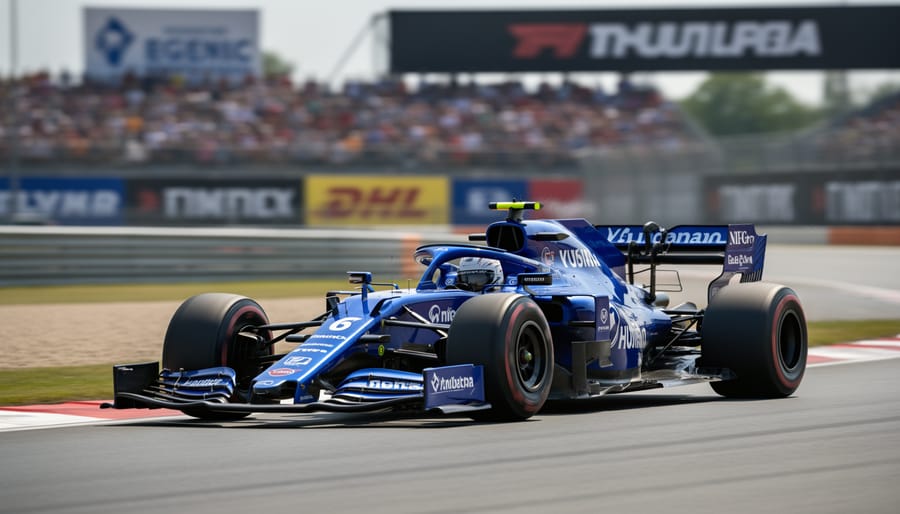
For motorsports photographers and racing teams covering Canadian racing events, traditional background removal has long been a significant bottleneck. The conventional approach requires skilled editors to painstakingly trace around race cars in Photoshop using tools like the Pen Tool or Magic Wand, a process that can consume 15 to 45 minutes per image depending on complexity.
The challenge intensifies with race car photography due to motion blur, complex aerodynamic elements like wings and diffusers, and intricate wheel spokes that demand pixel-perfect selection. Background elements such as catch fencing, grandstands, and trackside signage further complicate the masking process, requiring careful attention to preserve fine details while eliminating distractions.
This manual workflow presents serious scalability issues for racing operations. A single race weekend can generate hundreds or thousands of images that need processing for social media, press releases, and sponsor deliverables. Hiring professional editors with the necessary Photoshop expertise is expensive, with rates ranging from 40 to 100 dollars per hour in Canada. Even experienced photographers find themselves spending more time editing than shooting.
The situation becomes particularly problematic during peak racing season when quick turnaround is essential. Teams need content posted within hours of an event to maximize social media engagement, but manual editing timelines simply cannot meet these demands. This limitation has forced many smaller racing operations to compromise on image quality or significantly reduce their content output.
How AI Background Removal Actually Works
Understanding the Technology Behind the Magic
AI background removal relies on sophisticated neural networks—computer systems modeled after the human brain that learn to recognize patterns. These systems are trained on millions of images, teaching them to distinguish between a race car and its surroundings with remarkable precision.
The core technology is called image segmentation, which essentially means the AI analyzes each pixel in your photo and decides whether it belongs to the car or the background. Modern AI tools can identify subtle details like wheel spokes, rear-view mirrors, and even transparent windshields—elements that traditionally made manual cutouts time-consuming for motorsports photographers.
What makes this particularly valuable for racing photography is the AI’s ability to handle challenging scenarios: motion blur from high-speed panning shots, complex backgrounds like crowded grandstands at Canadian Tire Motorsport Park, or tricky lighting conditions during evening races. The technology processes these challenges in seconds rather than the hours manual editing would require.
For automotive professionals in Canada’s motorsports industry, understanding this technology isn’t about becoming a software engineer—it’s about recognizing that these tools use pattern recognition to automate what was once painstaking manual work, delivering consistent, professional results that enhance your marketing materials and media content.
Why Race Cars Are Uniquely Challenging
Race cars present distinct challenges for AI background removal algorithms that standard automotive photography doesn’t encounter. The highly reflective surfaces, including polished carbon fiber bodywork and glossy paint finishes, create complex light patterns and environmental reflections that AI must distinguish from the actual background. This becomes particularly demanding when chrome elements or metallic sponsor decals catch surrounding light.
The intricate aerodynamic components add another layer of complexity. Front and rear wings feature delicate end plates, fine mesh grilles, and multi-element profiles with minimal surface area that AI systems can struggle to detect accurately. These thin structures require precise edge detection to avoid deletion or distortion during the removal process.
Wheel spokes pose a specific technical hurdle, especially on open-wheeled formula cars or high-performance road racing vehicles. The AI must recognize the negative space between spokes while preserving the structural elements, often complicated by motion blur from action shots taken at Canadian circuits like Canadian Tire Motorsport Park or Circuit Mont-Tremblant.
Sponsor decals demand meticulous preservation since these branding elements represent significant commercial value for racing teams. Advanced AI tools must differentiate between background signage to remove and on-car graphics that define the vehicle’s identity and sponsorship commitments.
Top AI Tools for Race Car Background Removal
Professional-Grade Solutions
For motorsports photographers managing high-volume workflows at events like the Canadian Touring Car Championship or Formula 1’s Montreal Grand Prix, professional-grade AI tools deliver the precision and batch processing capabilities necessary for commercial work. Adobe Photoshop’s Sensei AI technology, integrated into its Remove Background and Select Subject features, provides industry-standard results that many Canadian automotive media outlets rely on. The AI intelligently recognizes vehicle contours, maintaining critical details like sponsor logos, aerodynamic elements, and tire textures that matter in professional racing photography.
Topaz Labs’ suite, particularly their AI masking capabilities, offers exceptional edge refinement for complex scenarios like cars with intricate wings, diffusers, and exposed mechanical components common in open-wheel racing. These tools excel at preserving fine details such as brake cooling ducts and carbon fiber weaving that demonstrate technical sophistication.
Capture One’s AI-powered selection tools provide tethered shooting integration, enabling real-time background removal during track sessions—a significant advantage for photographers working with racing teams requiring immediate social media content. While these professional solutions command higher price points than consumer alternatives, they deliver the consistency, RAW file support, and color accuracy that commercial motorsports photography demands. The investment typically justifies itself through time savings on deadline-driven projects and superior output quality.
Accessible Options for Enthusiasts and Teams
For Canadian racing enthusiasts and teams working with limited budgets, several accessible AI tools deliver professional results without requiring advanced photography skills. Remove.bg stands out as the most straightforward option, processing race car images in seconds through a simple drag-and-drop interface. The tool accurately identifies complex elements like spoilers, roll cages, and intricate livery designs, making it ideal for social media posts and quick marketing materials. Its free tier handles basic needs, while paid plans starting at $9 USD monthly suit teams requiring bulk processing.
Photoscissors offers another user-friendly alternative, particularly effective for images with challenging backgrounds like crowded pit lanes or grandstands. The software allows manual refinement through intuitive brush tools, giving users control over fine details such as suspension components and aerodynamic elements without mastering professional editing software.
Canva’s built-in background remover serves teams already using the platform for promotional materials, streamlining workflow for Canadian racing organizations producing event posters and sponsor presentations. While these tools lack the precision of professional-grade software, they provide sufficient quality for web use, social media, and internal documentation. Most importantly, they eliminate the learning curve associated with traditional photo editing, allowing racing teams to focus resources on track performance rather than graphic design expertise.
Cost and Performance Comparison
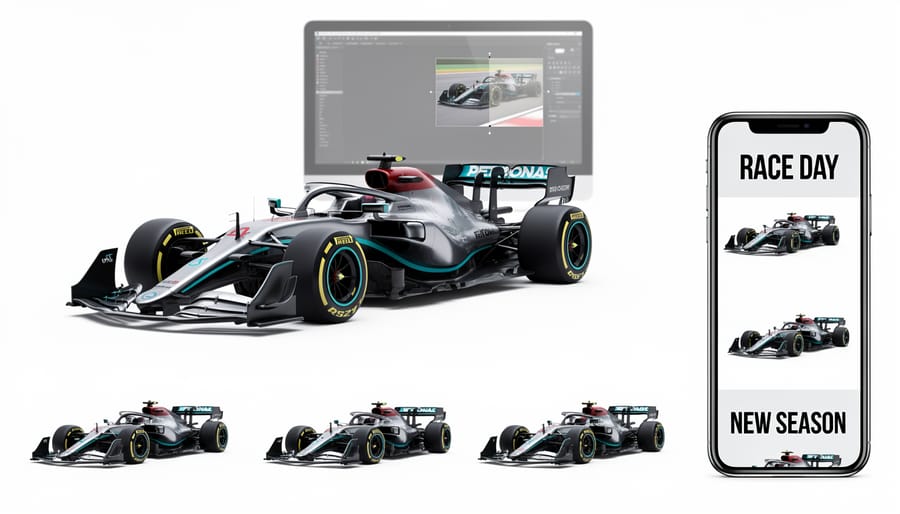
AI background removal tools vary significantly in pricing and performance, making it essential to evaluate options based on your specific racing photography needs. Free tools like Remove.bg offer 50 low-resolution exports monthly, suitable for social media posts but limited for professional marketing materials. For Canadian racing teams managing seasonal campaigns, subscription services typically range from $9-29 USD monthly, providing unlimited high-resolution downloads and batch processing capabilities that can handle entire race weekend galleries.
Batch processing becomes particularly valuable when processing hundreds of shots from events like the Canadian Tire Motorsport Park or Circuit Gilles Villeneuve. Professional-grade tools like Adobe Photoshop’s AI features (included in Creative Cloud subscriptions starting at $20 CAD monthly) can process 50-100 images simultaneously while maintaining fine details like brake dust, sponsor decals, and motion blur effects that define racing imagery.
Output quality differences become apparent with complex subjects. Premium AI tools better preserve intricate elements like suspension components, wheel spokes, and aerodynamic appendages. For motorsports applications, investing in mid-tier or professional solutions typically delivers cleaner edges and requires less manual refinement, ultimately saving time when preparing images for team presentations, sponsor reports, or media distribution across Canadian racing circuits.
Real-World Applications in Canadian Motorsports
AI background removal technology has rapidly become essential for motorsports marketing across Canada, transforming how racing teams and media professionals present their vehicles. From coast to coast, racing organizations are leveraging these tools to create compelling visual content that resonates with sponsors and fans alike.
At Canadian Tire Motorsport Park, one of Canada’s premier racing venues, photographers and team managers use AI background removal to isolate dramatic track shots for promotional materials. This allows them to place race cars against branded backgrounds for sponsor presentations or create consistent team livery showcases regardless of track conditions or lighting challenges.
Social media managers for Canadian racing series, including regional touring car championships and time attack events, depend on these tools to maintain visual consistency across platforms. By removing distracting paddock elements or weather-related backgrounds, they can focus audience attention on vehicle details, driver profiles, and sponsor logos—critical elements for maintaining partnerships.
Vehicle listings represent another practical application. Teams selling race-prepared cars or components use background removal to create professional catalog-style images that highlight technical details without track clutter. This proves particularly valuable for Canadian grassroots racing participants operating on limited budgets who need professional-looking materials for attracting buyers or securing entry-level sponsorships.
Media outlets covering events from Circuit Mont-Tremblant to Area 27 Motorsports Park utilize this technology to standardize race coverage imagery, ensuring publication-ready photos regardless of shooting conditions. The efficiency gains allow smaller Canadian motorsports media teams to compete with larger publications in visual presentation quality, while maintaining the quick turnaround times required in modern digital journalism.
Best Practices for Getting Quality Results
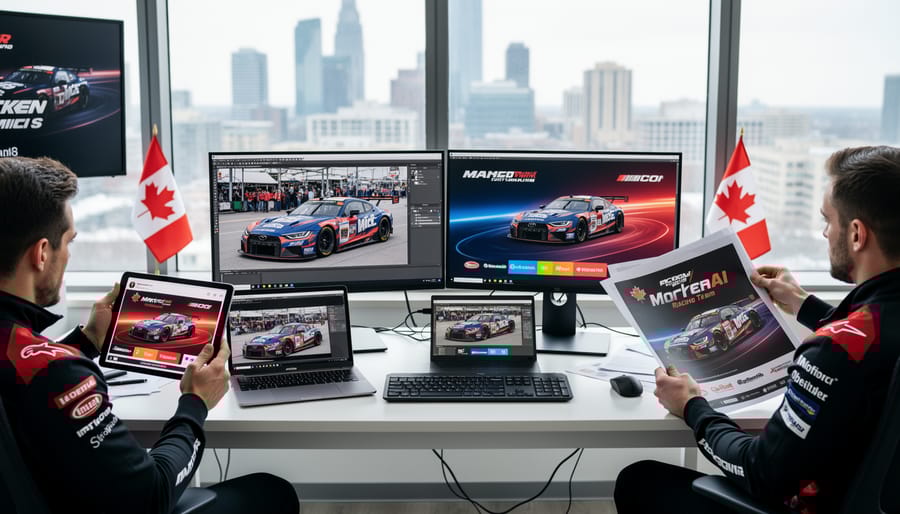
Achieving exceptional results with AI background removal starts before you even upload your images. When photographing race cars, position yourself to capture clear separation between the vehicle and its surroundings. Shoot from angles that minimize complex overlaps, such as tire sidewalls against similarly colored track surfaces or intricate aerodynamic elements merging with grandstand backgrounds.
Lighting plays a crucial role in AI accuracy. Well-lit subjects with distinct edges help algorithms differentiate between the car and background more effectively. Aim for even illumination across the vehicle, avoiding harsh shadows that might confuse edge detection. Canadian motorsport venues like Canadian Tire Motorsport Park or Circuit Mont-Tremblant often present challenging mixed lighting conditions, so adjust your ISO and shutter speed accordingly to maintain image clarity.
Resolution requirements matter significantly for professional outputs. Capture images at the highest resolution your camera allows, ideally 4000 pixels or more on the longest side. This provides the AI with sufficient detail to make precise selections around fine elements like aerials, mirrors, and wing endplates. Higher resolution also gives you flexibility for large-format prints or marketing materials.
Post-AI refinement ensures flawless results. Even the best algorithms occasionally miss subtle details. After removal, zoom in to inspect critical areas like wheel spokes, sponsor decals, and aerodynamic elements. Most tools offer manual refinement brushes to clean up any remaining artifacts. Pay special attention to transparent or reflective surfaces, which can challenge AI systems. For marketing materials representing Canadian racing teams or sponsors, this final quality check ensures your images maintain professional standards that reflect well on all stakeholders.
AI background removal has fundamentally transformed motorsports photography workflows across Canada, from the grassroots tracks in British Columbia to professional racing circuits in Ontario and Quebec. What once required hours of painstaking manual editing can now be accomplished in seconds, allowing photographers and marketing teams to deliver clean, professional race car images with remarkable efficiency. Tools like CarBG have democratized this technology, making enterprise-level capabilities accessible to amateur enthusiasts and professional studios alike.
The impact extends beyond time savings. Racing teams can now quickly produce marketing materials, social media content, and sponsor presentations without bottlenecking their creative processes. As artificial intelligence continues advancing, we can expect even more sophisticated automotive image processing capabilities, including better handling of motion blur, improved wheel detail preservation, and enhanced recognition of Canadian racing liveries and specifications.
Whether you’re documenting local track days or covering professional motorsports events, experimenting with AI background removal tools will streamline your workflow and elevate your visual storytelling. The technology is mature, accessible, and increasingly tailored to automotive photography’s unique demands.


