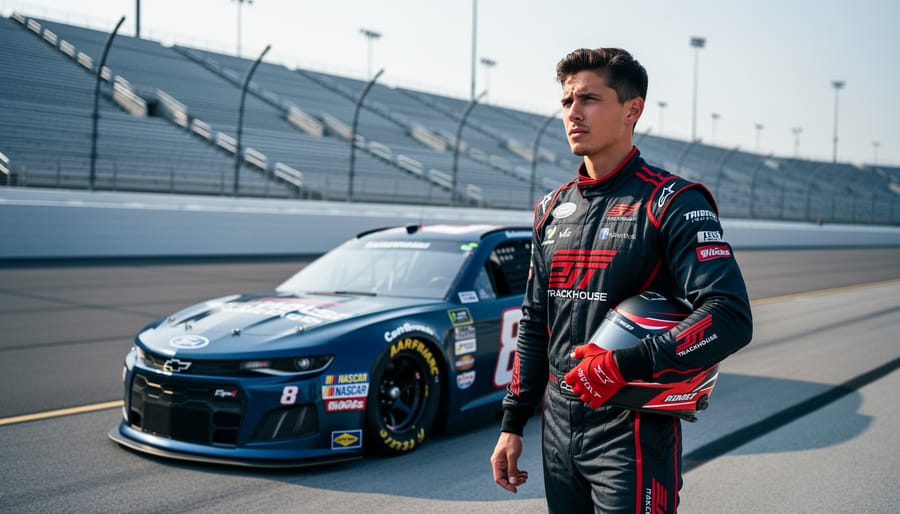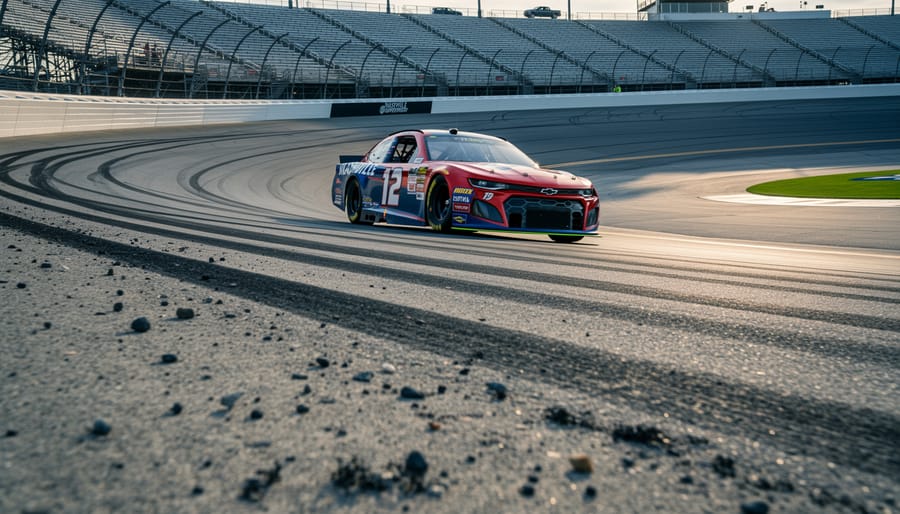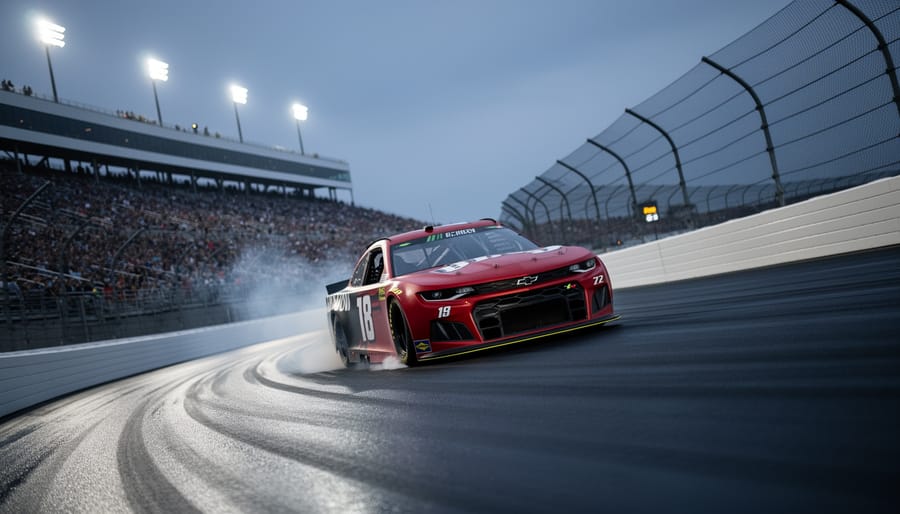
Richmond Raceway is a three-quarter-mile, D-shaped oval in Virginia that hosts NASCAR’s Cup Series on one of the sport’s most demanding short tracks, a sharp departure from the road course experience Canadian fans know at Canadian Tire Motorsport Park. Where CTMP rewards technical braking zones and elevation changes, Richmond delivers fender-rubbing, brake-overheating chaos under lights, with lap times measured in seconds rather than minutes and passing opportunities that demand late-braking aggression into tight corners.
For Canadian motorsports enthusiasts accustomed to watching cars negotiate thirteen turns over 2.5 miles, Richmond compresses that intensity into a 0.75-mile circuit with just four banked corners. The result is a relentless 400-lap sprint where tire management, track position, and crew chief strategy eclipse pure driving skill. The track’s abrasive asphalt chews through rubber compounds faster than nearly any circuit on the NASCAR calendar, forcing teams to balance speed against conservation across fuel and tire windows that rarely align.
Richmond holds particular relevance for Canadian fans tracking drivers like those who’ve competed in series north of the border before moving to NASCAR’s national stage. The track’s short-track pedigree, where contact is common and tempers flare, offers a visceral contrast to the precision driving celebrated at road courses. Spring and fall race weekends typically draw over 50,000 spectators to a facility just 90 minutes south of Washington, making it an accessible weekend destination for Canadians willing to cross the border for a different flavor of racing. This guide explains what sets Richmond apart and whether the trip south delivers value for fans raised on road racing.
Richmond Raceway: Track Profile and Racing Identity
Richmond Raceway sits in Richmond, Virginia, approximately 670 kilometres south of the Canadian border and within a day’s drive from Ontario’s motorsports hubs. This 0.75-mile D-shaped oval has hosted NASCAR racing since 1953, evolving from a fairgrounds dirt track into one of the sport’s most technically challenging short tracks.
The track’s configuration defies simple categorization. While classified as an oval, Richmond’s asymmetrical layout creates distinct corners with different banking angles: turns one and two feature 14 degrees of banking, while turns three and four drop to 8 degrees. This variance forces drivers to adapt their approach mid-lap, unlike symmetrical ovals where consistent technique works around the entire circuit. The frontstretch measures 1,290 feet, and the backstretch runs 860 feet, creating acceleration and braking zones that reward precision over raw speed.
| Specification | Richmond Raceway | Canadian Tire Motorsport Park |
|---|---|---|
| Track Length | 0.75 miles (1.2 km) | 2.459 miles (3.957 km) |
| Configuration | D-shaped oval | 10-turn road course |
| Surface | Asphalt, variable banking | Asphalt, natural terrain |
| Elevation Change | Minimal (3 feet) | Significant (55 feet) |
| Major Series | NASCAR Cup, Xfinity | NASCAR Pinty’s, IMSA, various |
| Capacity | Approx. 51,000 | Approx. 25,000 |
Richmond’s concrete surface, laid in 1988 and resurfaced in 2018, wears differently than other tracks. The abrasive concrete chews through tire rubber faster than typical asphalt, creating slick conditions as races progress. This degradation produces multi-groove racing where drivers search for grip in different lanes, often running inches apart at speeds exceeding 120 mph.
The track hosts two NASCAR Cup Series weekends annually, typically in spring and late summer, drawing crowds of 50,000 who pack grandstands surrounding the entire oval. Richmond’s reputation centres on physical, aggressive racing where fenders touch, tempers flare, and championship hopes can evaporate in contact-heavy restarts. Unlike superspeedways where aerodynamics dominate or road courses where corner variety spreads the field, Richmond’s short length and variable grip concentrate action into relentless, door-to-door battles that unfold lap after lap.
The Oval vs Road Course Experience: What CTMP Fans Should Expect
Racing Dynamics and Strategy
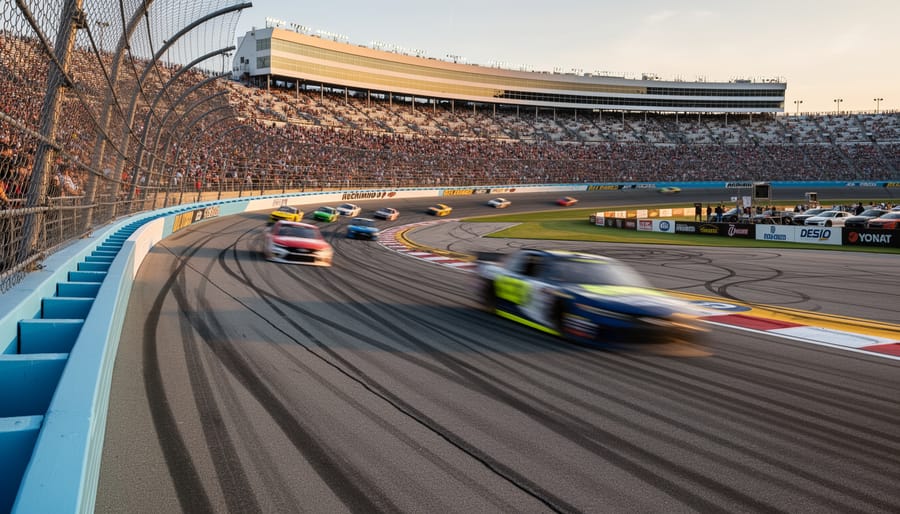
Richmond’s continuous left turns and 14-degree banking force a relentless rhythm that bears little resemblance to a Michigan road course with its varied corners and elevation changes. At three-quarter-mile length, lap times clock in around nineteen seconds, compressing strategic windows dramatically. Drivers complete nearly four hundred laps in a typical feature race, meaning track position becomes currency: falling a single spot behind traffic can cost multiple tenths per lap with nowhere to recover lost time through alternate lines.
The banking itself dictates setup compromises unknown to road racers. Cars need forward drive off the corners to accelerate down the short straights, but they also require enough rear grip to rotate through the tight, flat turns one and two without pushing up the track. Tire wear escalates quickly because all four corners scrub constantly, creating a race-long degradation curve that teams must anticipate. Pit strategy hinges on fuel windows and whether you can stretch a run long enough to gain track position during the cycle, or short-pit early to undercut rivals on fresher rubber. Weather doesn’t complicate things here; the battle stays mechanical, about managing fall-off and exploiting the draft in traffic rather than adapting to rain or shifting grip zones across a multi-turn complex.
Driver Skill Sets and Vehicle Setup
Oval racing demands a specialized skill set that diverges sharply from the techniques Canadian road racers hone at venues like CTMP. While road course drivers master threshold braking and the geometric precision required for corner apex hunting across left-right transitions, oval specialists develop an entirely different sensory relationship with their cars. At Richmond, drivers maintain throttle input through most of the lap, modulating entry speed and steering angle to rotate the car through continuous left turns. The primary talent lies in managing forward bite, the car’s ability to accelerate off the corner without wheel spin, while maintaining tire contact through Richmond’s 14-degree banking.
Vehicle setup philosophy reflects these priorities. Oval teams chase aggressive turn-in characteristics and rear-end stability under power, adjusting track bar height, rear spring rates, and stagger (right-side tire circumference versus left) to optimize cornering attitude. Road course setups, by contrast, emphasize braking stability through corner entry zones and balanced mid-corner grip that works across varying radius turns. Richmond crews might soften the right-front spring to help the car rotate into the corner, then stiffen the right-rear to prevent the back end from stepping out on throttle application, a combination that would create unpredictable handling on a road course with elevation changes and heavy braking zones.
The speed and strategy at Richmond center on consistency over 400 laps rather than the varied problem-solving Canadian fans watch at road courses.
Canadian Connections to Richmond Raceway
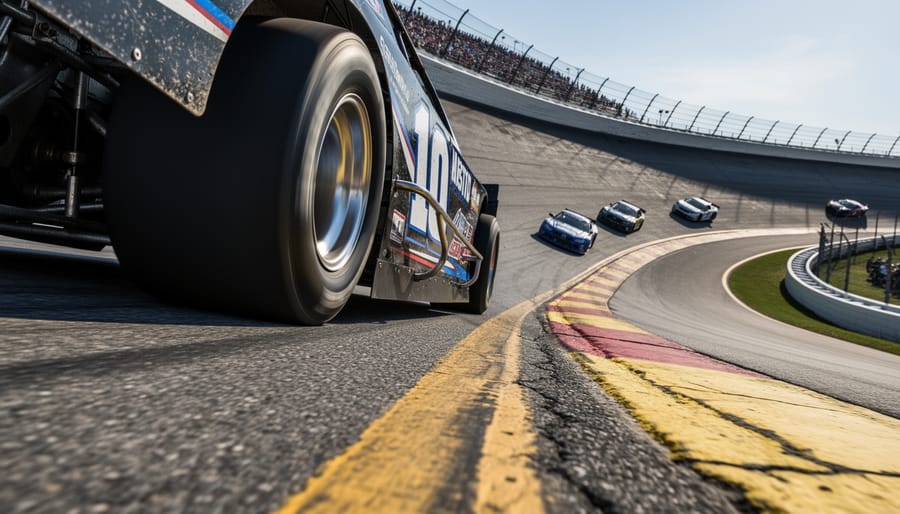
While Richmond Raceway sits firmly in NASCAR’s American heartland, Canadian drivers have made their mark on the three-quarter-mile oval over the years, demonstrating that the path from Canadian grassroots programs to oval racing success crosses borders. Though Canadians are more commonly associated with road racing excellence, several have tackled Richmond’s unique challenges across NASCAR’s national series.
Notable Canadian drivers who have competed at Richmond include:
– D.J. KenningtonNASCAR Xfinity Series and Truck Series (2010s), representing one of Canada’s most accomplished oval racers with multiple starts at Richmond
– Ron FellowsNASCAR Cup and Xfinity Series (1990s-2000s), primarily known for road course prowess but competed in oval events including Richmond
– Patrick CarpentierNASCAR Xfinity Series (2000s), transitioning from Champ Car to stock car racing with Richmond appearances
– Andrew RangerNASCAR Xfinity Series (2000s-2010s), bringing open-wheel experience to the short-track environment
– Alex TaglianiNASCAR Xfinity Series (2000s-2010s), another Canadian open-wheel convert who tested oval racing skills
Canadian presence at Richmond extends beyond drivers. Sponsor involvement has occasionally connected Canadian brands to Richmond events, particularly when Canadian drivers compete, though sustained corporate backing from north of the border remains less common than at road course venues like Watkins Glen or Canadian Tire Motorsport Park itself.
For Canadian racing fans, Richmond represents an accessible introduction to American oval racing culture. The track sits roughly 900 kilometers from Toronto and 850 kilometers from Montreal, a manageable day’s drive or short flight via Washington Dulles or Richmond International Airport. Many Canadians who follow motorsport stars at home find Richmond’s September and spring race weekends ideal for cross-border trips, with straightforward I-95 corridor access and border crossings that typically process motorsports travelers efficiently during race weekends.
The track’s relative proximity to major Canadian population centers, combined with NASCAR’s established media presence in Canada through TSN and Sportsnet, means Richmond races are both physically and culturally accessible to Canadian fans interested in experiencing authentic short-track oval racing.
Attending a Race at Richmond: Planning Your Visit from Canada
Getting There and Where to Stay
Richmond sits roughly 800 kilometres from Toronto and 950 from Montreal, making it a manageable weekend trip for committed fans. The most direct route from Southern Ontario follows I-90 through Buffalo, then connects to I-81 South through Pennsylvania before picking up I-64 East into Richmond. From Montreal, take I-87 South through New York, connecting to I-81 near Albany. Both routes require 8-10 hours of driving time, not including border delays.
Cross the border with your passport, proof of vehicle insurance, and a clear itinerary. Mid-week crossings typically move faster than Friday departures. Avoid race weekend border rushes by crossing Thursday afternoon or earlier.
Richmond International Airport (RIC) lies 15 kilometres from the track, serviced by Air Canada connections through major US hubs. Norfolk and Washington Dulles offer alternative fly-drive options with competitive rental rates.
Book accommodation early, Richmond’s hotel inventory tightens during race weekends. The Short Pump area northwest of downtown clusters mid-range chains (Hilton Garden Inn, Courtyard, Hampton) 20 minutes from the track. Downtown Richmond hotels sit 25 minutes away but offer more dining variety. Glen Allen, directly north, provides budget options and quick highway access.
Reserve three months ahead for April and September races. Prices spike 40-60 percent during race weekends compared to off-peak rates. Wednesday check-ins secure better availability than Thursday arrivals when the NASCAR crowd descends.
Race Weekend Experience and Ticketing
Richmond’s seating architecture reflects its short-track DNA. The main grandstands wrap around turns one through four, positioning you close enough to hear tire squeal and feel engine heat. Lower rows put you at car level, you’ll see drivers working the wheel and fender contact happening in real time. Upper sections offer sight lines across the entire D-shaped layout, letting you track battles developing through all four corners simultaneously.
Ticket prices typically range from $45 for upper-deck seats to $150 for lower-bowl positions during Cup Series weekends. Xfinity Series races run cheaper, often $30 to $80. Richmond frequently bundles tickets for Friday night Xfinity and Saturday night Cup races, offering better value than buying separately. Children under two sit free in your lap, though dedicated seats for kids cost the same as adults.
The infield opens for general admission with separate passes, giving access to merchandise haulers, driver appearances, and unfiltered views of pit road action. Be prepared for standing and walking, comfort differs drastically from grandstand seating. Coolers are allowed with specific size restrictions (check current policy), and outside food is permitted, a rarity at major motorsports venues.
Richmond’s night racing creates a unique sensory environment. Track lights illuminate the racing surface while grandstands sit partly shadowed, and the sound echoes differently after dark. The compact layout means you’re never far from concessions, restrooms, or merchandise stands, a practical advantage over sprawling road course facilities where walking between amenities can consume twenty minutes.
How Richmond Fits Into the North American Racing Landscape
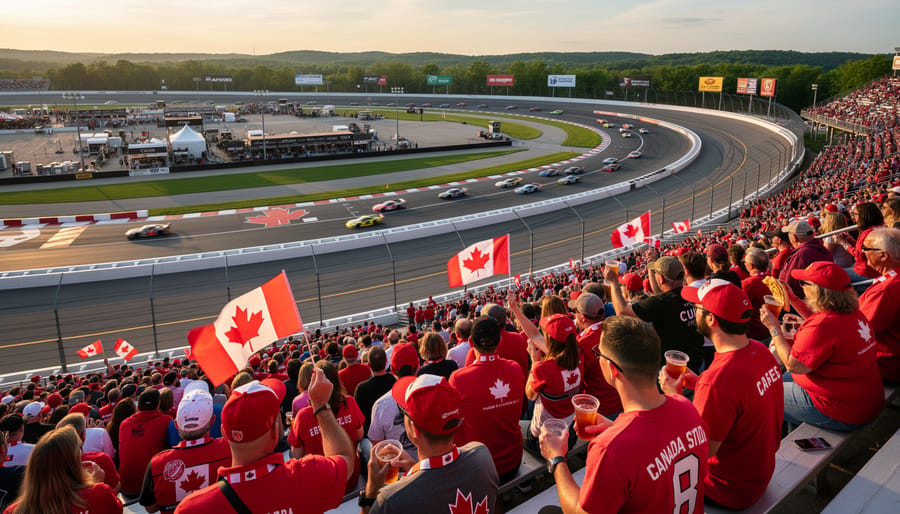
Richmond Raceway represents one piece of North America’s remarkably diverse motorsports ecosystem, where short ovals, road courses, and superspeedways each demand distinct skill sets and offer unique spectator experiences. For Canadian fans accustomed to CTMP’s technical road course layout, with its elevation changes, blind corners, and varied braking zones, Richmond demonstrates how the continent’s racing culture encompasses radically different competitive environments.
Canadian Tire Motorsport Park carries deep historical significance as Canada’s premier road racing facility, hosting everything from sportscars to touring cars since 1961. Richmond’s oval tradition, dating to 1946, developed parallel but separate racing DNA. These venues aren’t competitors; they’re complementary expressions of automotive competition. A driver who masters CTMP’s turn 8 downhill braking zone faces an entirely different challenge navigating Richmond’s flat, banked corners at sustained speed.
This diversity strengthens North American motorsports. The Canadian grassroots racing pipeline often emphasizes road course fundamentals, while American short tracks develop different racecraft. Yet crossover happens: NASCAR drivers compete at road courses like Watkins Glen, while road racers occasionally test oval skills. Understanding both disciplines deepens appreciation for what each driver accomplishes.
Short tracks like Richmond also connect to Canada’s growing truck racing scene and regional oval circuits in Ontario and the Maritimes. The fundamental principles Richmond showcases, close-quarters racing, strategic patience, and chassis management, apply across track types. Experiencing Richmond after knowing CTMP doesn’t replace the Canadian road course experience; it expands your understanding of how versatile truly complete drivers must be when facing North America’s full racing spectrum.
Frequently Asked Questions
Canadians considering their first visit to Richmond Raceway often have questions about the practical and experiential aspects of attending an oval race. The track welcomes international visitors, and the border crossing process is straightforward with proper identification, a valid passport is required for all Canadian citizens. Richmond hosts NASCAR Cup Series races in both spring and fall, with the late-summer August race typically offering warmer weather and longer daylight hours, while the spring race in March or April provides cooler temperatures and fewer regional tourists.
Is Richmond Raceway accessible for Canadian fans?
Yes, Richmond is a seven-to-eight-hour drive from Toronto and easily accessible from major Canadian cities. The track offers straightforward parking and entry procedures for international visitors with valid passports.
How does the noise level compare to road course racing?
Oval racing at Richmond is noticeably louder than road course events due to sustained high RPMs and sound bouncing off the grandstands. Ear protection is essential, and the track provides disposable earplugs at entry gates.
What do tickets cost compared to Canadian venues?
Grandstand seats at Richmond range from $40 USD to $120 USD for Cup Series races, comparable to premium CTMP pricing but offering closer proximity to the action throughout the entire race.
Are there family-friendly options at the track?
Richmond features a Fan Zone with interactive displays, driver appearances, and kid-friendly activities. The compact layout makes it easy for families to navigate without the long walks required at larger facilities.
Safety protocols mirror those at Canadian tracks, no outside food or beverages beyond factory-sealed water bottles, and bag checks at entry points. The track’s compact footprint means spectators can walk the entire facility in 15 minutes, making it easier to explore different viewing angles than sprawling road courses. Richmond’s atmosphere leans heavily into NASCAR culture, with more emphasis on driver merchandise and pre-race ceremonies than Canadian racing venues typically feature, but the welcoming fan environment translates well across the border.