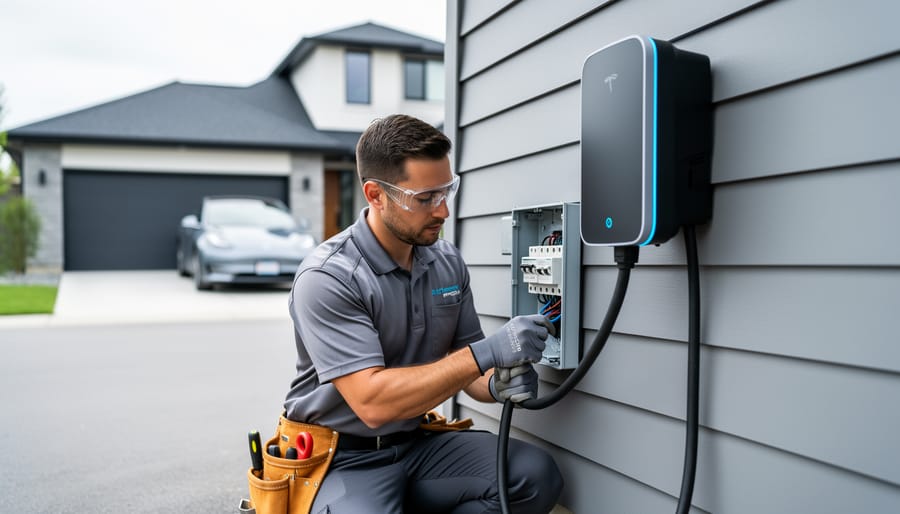
Most Canadian EV charger installs start from the same quote baseline: about four hours of labour, a permit, and roughly $300 in materials, with the charger itself not included. That’s the number to hold in your head when the first estimate lands. Real quotes swing from a few hundred dollars to several thousand, and the gap comes down to panel capacity, the length of the wire run from panel to charger, and whether the installer is also supplying the unit.
The pace of electric racing and road-going EVs has pushed charging out of the novelty category and into basic infrastructure for homes, workplaces and small commercial sites. Rebates can soften the bill, with up to $2,000 per charger and up to $14,000 per workplace while funding lasts, covering eligible costs such as the charger, installation, permits and other direct deployment expenses. Operators should also note that electricity sold at charging stations is to be priced by measured kWh, not by time or per charge.
This guide breaks down what an installation involves, why costs vary, where rebate limits bite, and how to vet an installer before you sign anything.
What an EV Charging Station Installer Actually Does
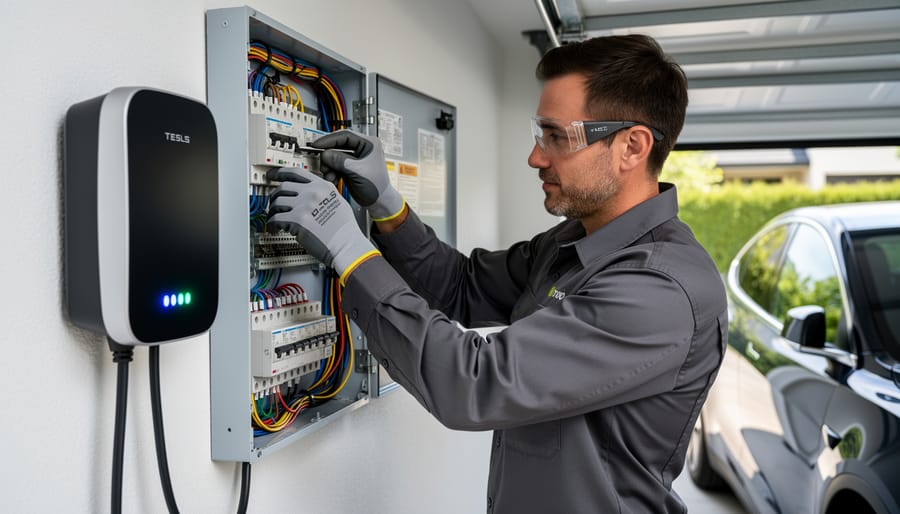
Home, Workplace and Commercial Jobs Are Not the Same
A single-car garage is the simplest job an installer will see. One unit, one dedicated circuit, a short run from the panel, and usually one driver. The questions are mostly about whether the home’s electrical service has room to spare.
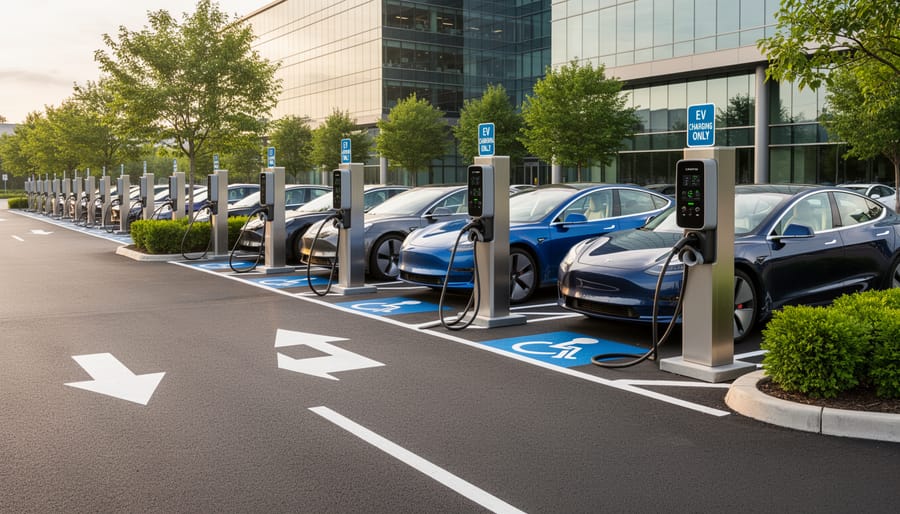
Workplace lots change the maths. You’re often installing several units at once, which means the building’s total capacity has to be shared sensibly so the chargers don’t overload the service. That calls for planning, not just wiring. Many operators now treat this as part of a broader digital transformation of how they manage energy, access and fleet vehicles, and that shapes which hardware and installer make sense.
Public-facing sites add another layer. Because operators can sell electricity by measured kWh rather than by time or per charge, metering and billing become part of the project, not an afterthought. Ask any installer how the system will measure energy and handle payment.
The takeaway: the more units and the more people using them, the more a quote should address capacity and billing, not just labour and materials.
Anatomy of a Typical Installation Quote
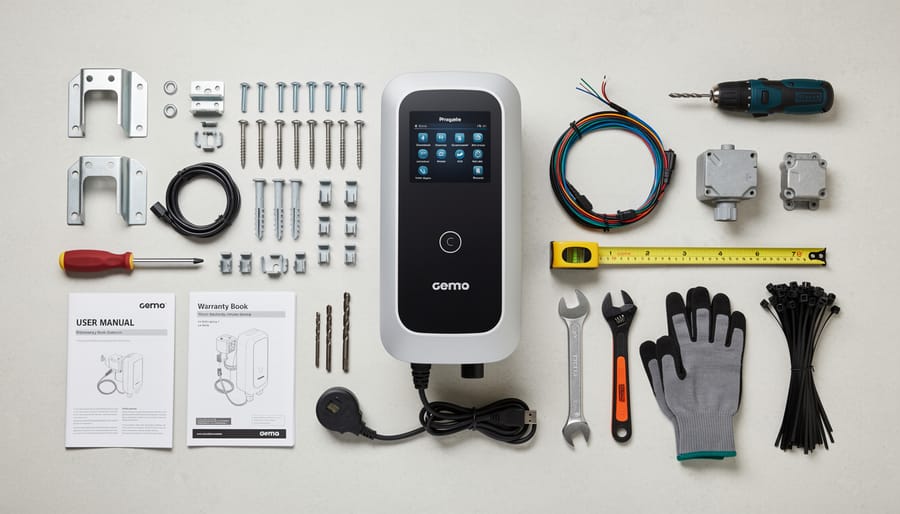
A typical installation quote has a simple skeleton. Based on the verified baseline, expect roughly four hours of labour, a permit, and around $300 in materials, with the charger itself left out. That last point trips up many first-time buyers, who assume the number on the page covers everything they need to plug in.
Here is how those lines usually break down, and what to ask about each one.
| Line item | What it covers | What to ask the installer |
|---|---|---|
| Labour (about four hours) | Running the circuit, mounting the unit and connecting it to the panel | What tasks fall inside those hours, and what happens if the job runs long? |
| Permit | The electrical permit needed to install the circuit legally | Who applies for it, and is inspection arranged as part of the job? |
| Materials (around $300) | Wire, breaker, conduit and fittings for the run | Is this a fixed allowance or an estimate that changes with wire length? |
| Charger (excluded unless stated) | The EVSE hardware itself | Is the unit supplied by you or by me, and is it priced on its own line? |
Why is the charger usually priced separately? Many buyers purchase the hardware on their own or choose a specific unit before calling anyone. Keeping it off the installation line lets you compare labour and materials quotes fairly, whatever unit ends up on the wall.
Reading a quote critically comes down to specificity. Be wary of a single lump-sum figure labelled “installation” with no breakdown. If a line says “miscellaneous” or “supplies” without an allowance, ask for it to be itemized. A trustworthy quote states the hours, names the permit, and says plainly whether the charger is in or out.
Itemization matters for another reason too. Funding programs can reimburse eligible costs such as installation, licences and permits, so a clearly broken-down quote is easier to support if you apply for a rebate. Vague wording costs you leverage on both fronts, in negotiation and in paperwork.
Why Canadian Installation Costs Swing So Widely
Installation costs in Canada can run from a few hundred dollars to several thousand, and the gap comes down to three variables that have little to do with the charger itself: panel capacity, the wire run, and who supplies the hardware.
Panel capacity comes first. A Level 2 circuit draws a serious, sustained load, so an installer has to confirm your electrical service can handle it alongside everything else in the house. If there’s spare capacity, the job stays simple. If the panel is full or the service is undersized, you may need an upgrade before any charging circuit goes in, and that is often where a modest quote turns into a big one.
The wire run is the second driver. A garage that shares a wall with the electrical panel is the best case: a short cable path, minimal labour, and little drilling or trenching. A detached garage, a carport, or a driveway spot at the far side of the property is a different job. The farther the circuit travels, the more cable and conduit it needs, and the more labour goes into running it safely. Routing through finished walls, around obstacles, or underground adds time and complexity.
That’s why the baseline quote works as a floor, not a promise. A typical estimate of roughly four hours of labour, a permit, and around $300 in materials assumes a straightforward site. Every extra metre of difficult cable work stretches those numbers.
The third variable is whether the installer supplies the charger. Hardware is usually excluded from that baseline, so a quote that bundles the unit in will naturally look higher than one that doesn’t. Compare like with like before judging which installer is cheaper.
The practical takeaway: ask any installer to assess your panel and measure the route before quoting. Two homes in the same city can land at very different totals for purely physical reasons.
The Rebate Factor: What the Funding Covers
Funding is where an installation quote can change meaningfully, so it pays to understand what the rebate actually covers before you sign anything. The verified terms are straightforward: support is available up to $2,000 per charger and up to $14,000 per workplace, while funding lasts. That last phrase matters. The money is limited, and a quote that assumes a rebate you can’t actually claim leaves you holding the difference.
The program’s eligible expenses go beyond the hardware. They include the site EV chargers themselves, installation costs, licences and permits, and other direct deployment costs. In practice, that means the labour, the permit fee and the materials on your installer’s quote may all count toward a claim, not just the box on the wall. For a workplace installing several units, the per-workplace ceiling is the number to watch, since it caps the total no matter how many chargers you add.
Before committing, confirm current availability and eligibility directly with the program administrator. Details can shift, and an installer’s enthusiasm for a rebate isn’t a substitute for checking the rules yourself.
Your quote should work as supporting paperwork. Ask for itemized lines that separate labour, permit costs, materials and the charger hardware, so each expense can be matched to an eligible category. A single lump-sum figure is hard to defend if you’re asked to justify a claim. Itemization also lets you compare bids on equal footing, which is the same habit that protects you when funding runs dry and you’re paying full price.
Selling Electricity by the kWh: What Operators Need to Know
Operators of charging stations will be allowed to sell electricity based on a measured quantity of energy, in kilowatt-hours (kWh), rather than by time or per charge. That is a meaningful change for anyone planning a paid charging site.
A kilowatt-hour is simply the unit your home electricity bill already uses. It measures how much energy actually flows into the vehicle’s battery. A driver who adds 20 kWh pays for 20 kWh, whether the session takes 30 minutes or three hours.
That is fairer to drivers for a practical reason. Time-based pricing punishes people whose vehicles charge slowly, even though the cause may be the car’s onboard limits or cold weather, not anything the driver controls. A flat per-charge fee can leave someone paying the same for a small top-up as for a near-full battery. Metering by kWh ties the price to what was delivered.
For workplace and commercial operators, the practical takeaway is to bring billing into the planning conversation early. When you gather quotes, ask each installer how a site would measure and report energy delivered, and how that fits the way you intend to charge users. Do not assume every unit handles this the same way. Rather than relying on a sales claim, ask for the answer in writing.
This article does not cover specific enforcement dates or which products meet the requirement, so confirm those details with your installer and the relevant authorities before buying hardware.
How to Vet an Installer Before You Sign
Hiring an installer is where a good project goes sideways, so treat the quote as the start of a vetting process rather than the finish line. Before you commit, run through this checklist:
- Request written, itemized quotes from at least three installers, with labour, permit, materials and the charger (EVSE) broken out as separate lines.
- Confirm the installer’s licence with your provincial electrical authority rather than taking a business card or website badge on faith.
- Ask whether a load assessment of your panel will be done, and get the result in writing so any panel upgrade is justified rather than assumed.
- Find out who pulls the permit. If the answer is “you”, know that before you sign.
- Confirm who books the inspection and what happens if the work fails it.
- Ask for a clear statement of what is excluded, since a typical baseline already leaves the charger out.
- Compare the three quotes line by line, not just by the bottom number.
Quotes can differ by thousands of dollars for reasons that have nothing to do with quality, such as panel capacity or the length of the wire run, so a wide spread is a prompt to ask questions, not a verdict. A cheap quote that skips the permit or inspection is not a bargain. If you plan to claim a rebate, an itemized quote also makes your paperwork easier, since eligible costs include installation, licences and permits.
Think of it like choosing a pit crew: you wouldn’t hand your car to whoever shows up first, and the same diligence behind our track-day tips applies here. Ask, verify, and compare before you pay.
Common Questions About Hiring an EV Charger Installer
Do I need a permit? In most Canadian jurisdictions, yes. Installing a dedicated EV circuit is electrical work, and permits are typically part of the job. A standard quote includes the permit fee alongside roughly four hours of labour and about $300 in materials. Your local authority sets the rules, so confirm with your municipality or provincial electrical regulator before work starts.
Is the charger included in the quote? Usually not. The typical baseline excludes the charger, so you’ll need to buy the unit separately or ask whether the installer supplies one. That single choice is a big reason costs range from a few hundred dollars to several thousand. Ask for the hardware price as its own line item.
Can I get a rebate for installation? Possibly. The funding available is up to $2,000 per charger and up to $14,000 per workplace, while funding lasts. Eligible expenses include the charger, installation costs, and licences or permits. Because the money is limited, check current availability and your eligibility with the program administrator before you sign, and ask your installer to itemize costs so they support a claim.
Can I upgrade my panel later? Often you can, but it isn’t free. Panel capacity is one of the main price drivers, and an upgrade is a separate project from the charger install. If your panel is already tight, it’s cheaper to have the installer assess it up front than to discover the limit after the fact. A licensed electrician can run that load assessment and tell you what’s realistic.
If you’re planning ahead for the colder months too, our winter driving guide covers what to consider when choosing a vehicle for snow and ice.
A sound installation quote is transparent, itemized and built around your electrical reality. It should show the labour hours, the permit and the materials separately, and make clear whether the charger itself is included. If a line item is vague, ask what it covers before you sign.
The economics are shifting, too. Rebates of up to $2,000 per charger, and up to $14,000 per workplace while funding lasts, can offset real costs, and eligible expenses reach beyond the hardware to installation, licences and permits. For operators, metered selling by the kWh puts billing on a fairer footing for drivers and changes how a commercial project pays for itself.
None of that removes the need for homework. Costs in Canada run from a few hundred dollars to several thousand, driven by panel capacity, the length of the wire run and who supplies the charger. Gather several quotes, compare them line by line, and confirm current funding and eligibility with the program administrator before you commit. That is the independent, accountable approach we take here: give you the questions to ask, then leave the decision with you.