
Grassroots racing series represent the most accessible entry point into competitive motorsport in Canada, offering aspiring racers real track experience without the six-figure budgets demanded by professional circuits. These programs—ranging from karting championships to time attack competitions and wheel-to-wheel club racing—provide the foundation where amateur drivers develop skills, build racing credentials, and determine whether motorsport passion justifies long-term investment.
Canadian grassroots racing operates differently than its American counterpart. Regional sanctioning bodies like ASN Canada FIA oversee hundreds of local events annually, while geographic challenges mean competitors often travel substantial distances between venues. Winter limitations compress most racing activity into May through October, creating intense seasonal schedules. Entry costs typically range from $3,000 annually for arrive-and-drive karting programs to $15,000-plus for dedicated race car ownership in club series, positioning these competitions between casual track days and semi-professional racing.
Understanding which series aligns with your goals, budget, and mechanical aptitude determines success. Karting develops fundamental racecraft with minimal equipment investment. Time attack suits drivers who prefer individual performance over door-to-door competition. Spec racing series—where all competitors use identical or heavily regulated vehicles—emphasize driver skill while controlling costs. Each pathway offers distinct advantages, requirements, and advancement opportunities within Canada’s tightly-knit motorsport community.
This guide examines the specific grassroots racing options available to Canadian competitors, transparent cost breakdowns for each discipline, and practical steps for entering your first competitive season.
Understanding Grassroots Racing in Canada
Grassroots racing represents the foundation of Canadian motorsport, where amateur drivers compete in organized events that prioritize accessibility, community, and driver development over large purses and professional sponsorships. Unlike professional racing series such as NASCAR or IndyCar, which feature multi-million-dollar budgets and factory-backed teams, grassroots programs operate on a fundamentally different philosophy: creating pathways for ordinary enthusiasts to experience competitive motorsport without requiring substantial financial resources or industry connections.
The distinction between grassroots and professional racing extends beyond budget differences. Grassroots events emphasize participation over spectacle, focusing on creating opportunities for drivers to develop their skills in a supportive environment where competition remains fierce but camaraderie thrives. These programs typically feature spec classes—where all competitors use similar equipment—to level the playing field and ensure that driver talent, rather than unlimited spending, determines success on track.
Canada’s grassroots racing landscape carries unique characteristics shaped by the country’s geography, climate, and automotive culture. The seasonal nature of racing in most provinces creates an intense, condensed competition calendar during warmer months, while winter forces many racers into indoor karting facilities or simulator training. Regional clubs across provinces from British Columbia to Ontario and Quebec form the backbone of Canadian grassroots motorsport, organizing events at both permanent road courses and temporary facilities like airport runways converted into autocross venues.
Understanding common grassroots racing formats helps clarify the diverse entry points available to aspiring racers:
- Club Racing
- Wheel-to-wheel competition organized by regional automotive clubs, typically held at dedicated road courses with multiple cars on track simultaneously.
- Time Attack
- Solo timed runs where drivers compete against the clock rather than directly against other cars, focusing on achieving the fastest lap time possible.
- Autocross
- Low-speed precision driving events held in parking lots or airfields where drivers navigate cone courses, emphasizing car control and technical skill over pure speed.
- Track Days
- Non-competitive sessions at race circuits that allow enthusiasts to drive their vehicles at speed in a controlled environment, often serving as the gateway to competitive racing.
These varied formats ensure that grassroots racing in Canada accommodates different skill levels, budget constraints, and competitive preferences. The accessibility of these programs has democratized motorsport participation, transforming racing from an exclusive pursuit into an achievable goal for dedicated automotive enthusiasts across the country. This inclusive approach has cultivated a vibrant community where weekend warriors share paddock space and technical knowledge, creating the essential infrastructure that feeds talent into higher levels of Canadian motorsport.
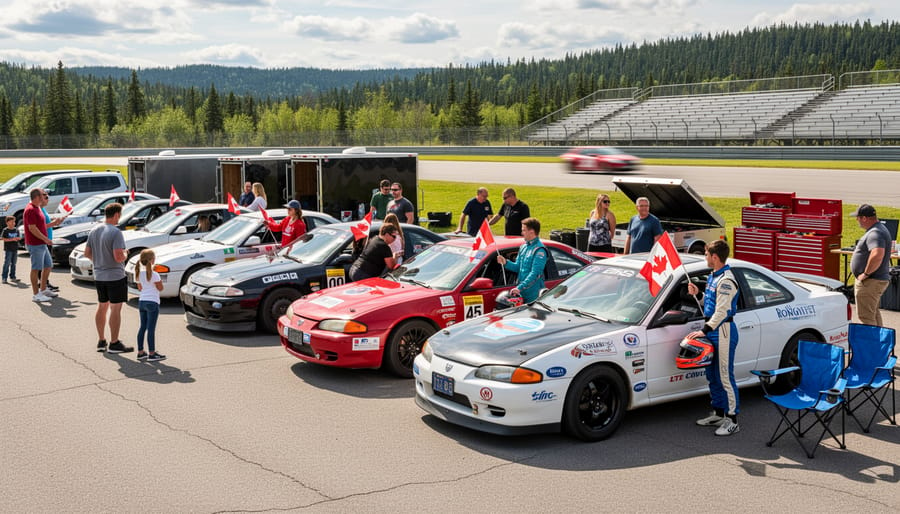
Major Canadian Grassroots Racing Series
Road Racing and Circuit Programs
Canada’s road racing and circuit programs offer some of the most accessible pathways into competitive motorsport, with regional organizations providing structured competition across the country. These programs emphasize driver development and technical skill-building in a controlled track environment, making them ideal for racers transitioning from track days or karting.
The Canadian Automobile Sport Clubs (CASC) operates the most extensive club racing network in Canada, with regional chapters offering weekend race formats at established circuits. CASC programs welcome drivers with appropriate safety equipment and valid competition licenses, which can be obtained through approved racing schools. The organization sanctions multiple car classes, from production-based vehicles requiring minimal modifications to purpose-built race cars in categories like Formula 1600 and sports racing prototypes. Entry requirements typically include a CAMS-approved race suit, helmet meeting Snell SA2015 or newer standards, and a vehicle that passes technical inspection according to class regulations.
Major regional circuit racing organizations include:
- CASC Ontario – based at Canadian Tire Motorsport Park and Calabogie Motorsports Park
- ASN Canada FIA (Quebec) – operating at Circuit Mont-Tremblant and Circuit ICAR
- SCCBC (Sports Car Club of British Columbia) – racing at Area 27 and Mission Raceway Park
- Race Nova Scotia – hosting events at Atlantic Motorsport Park
Provincial organizations like ASN Canada in Quebec offer similar structures with French-language support and provincial championship series. Most regional programs run from May through October, with six to eight race weekends per season. Each weekend typically includes practice sessions, qualifying, and two or three races, allowing competitors to maximize track time and points-earning opportunities.
Entry-level classes often feature spec racing formats where all competitors use identical or highly regulated cars, creating close competition based on driver skill rather than equipment budgets. These classes serve as proving grounds for racers developing their craft before progressing to more advanced categories.
Rally and Rallycross Programs
Rally and rallycross represent some of Canada’s most accessible grassroots motorsport options, offering diverse entry points across the country. The Canadian Rally Championship serves as the national pinnacle, but numerous regional feeder series provide practical starting points for newcomers without requiring cross-country travel commitments.
Provincial programs like Rally Sport Ontario, Rallye Sport Québec, and the Pacific Forest Rally Championship operate throughout the year, typically hosting four to eight events per season. These regional series allow competitors to develop skills on varied terrain, from gravel forest roads to winter snow stages, while competing close to home. Most provincial championships feature multiple classes based on vehicle preparation levels, ensuring drivers can start with relatively stock vehicles before investing in extensive modifications.
Rallycross offers an even lower barrier to entry. Events organized through clubs affiliated with CARS (Canadian Association of Rallysport) run on small, mixed-surface courses that emphasize car control over outright speed. Participants can compete in nearly any vehicle, including daily drivers, making rallycross ideal for first-time competitors. Track time happens in short bursts, limiting mechanical stress while maximizing seat time per dollar invested.
Cost considerations vary significantly between disciplines. Regional rally entry typically ranges from $300 to $800 per event, plus safety equipment and vehicle preparation costs estimated at $5,000 to $15,000 for basic competition readiness. Rallycross proves more economical, with entry fees between $75 and $200 per event and minimal vehicle modifications required beyond basic safety equipment like helmets and fire extinguishers. Both disciplines require appropriate insurance coverage and CARS membership, adding approximately $500 to $1,000 annually to overall budgets.
Autocross and Time Attack Series
Autocross and time attack events represent the most accessible entry points into competitive motorsport across Canada, requiring minimal investment while delivering genuine racing experience. These disciplines allow drivers to compete in their daily-driven vehicles, eliminating the need for expensive purpose-built race cars that characterize many traditional racing series.
Autocross, often called solo racing, takes place in parking lots or airport tarmacs where pylons define a technical course. Organizations like the Sports Car Club of British Columbia, Alberta Sports Car Club, and Ontario Region SCCA host regular weekend events throughout the racing season. Participants typically pay between $40 and $80 per event, with the only mandatory safety equipment being an approved helmet. Drivers compete individually against the clock, navigating tight courses that emphasize car control and precision over raw speed. This format means participants can use completely stock vehicles, from economy cars to high-performance sports cars, with classes ensuring fair competition across various vehicle types.
Time attack events build on this foundation but take place on proper racing circuits. Series like CSCS Time Attack in Ontario and the Western Canadian Time Attack Championship provide opportunities to push performance limits on tracks like Canadian Tire Motorsport Park and Area 27. While requiring additional safety equipment such as roll bars and fire suppression systems for faster classes, beginner categories remain remarkably accessible.
Both disciplines welcome complete novices, with experienced drivers and instructors typically available to provide guidance. Many participants begin with autocross to develop fundamental skills before progressing to time attack or wheel-to-wheel racing, creating a natural progression pathway through Canadian motorsport.
Ice Racing and Winter Programs
Canada’s extended winter season creates distinctive grassroots racing opportunities that turn frozen lakes and snow-covered circuits into competitive venues. Ice racing represents one of the country’s most accessible and uniquely Canadian forms of motorsport, with series operating across Quebec, Ontario, and the Prairie provinces from December through March.
Organizations like the Canadian Ice Racing Championship and regional clubs sanction events on frozen lakes where competitors navigate studded-tire equipped vehicles around plowed courses. Entry costs remain remarkably low—often under $200 per event—making ice racing an ideal winter activity for enthusiasts seeking seat time when conventional tracks close. Participants range from modified front-wheel-drive sedans to purpose-built ice racers, with many series offering classes for stock vehicles requiring minimal modifications beyond proper studded tires and basic safety equipment.
The climate’s influence extends beyond ice racing. Many grassroots programs incorporate winter driving schools and rally-cross events in snow conditions, developing car control skills transferable to summer competition. This seasonal adaptation has shaped Canadian racing culture differently from southern counterparts, with competitors often participating in multiple disciplines year-round rather than single-series focus. Winter programs also serve as cost-effective training grounds, allowing racers to maintain competitive edge and mechanical proficiency during off-season months while building camaraderie within the motorsport community.

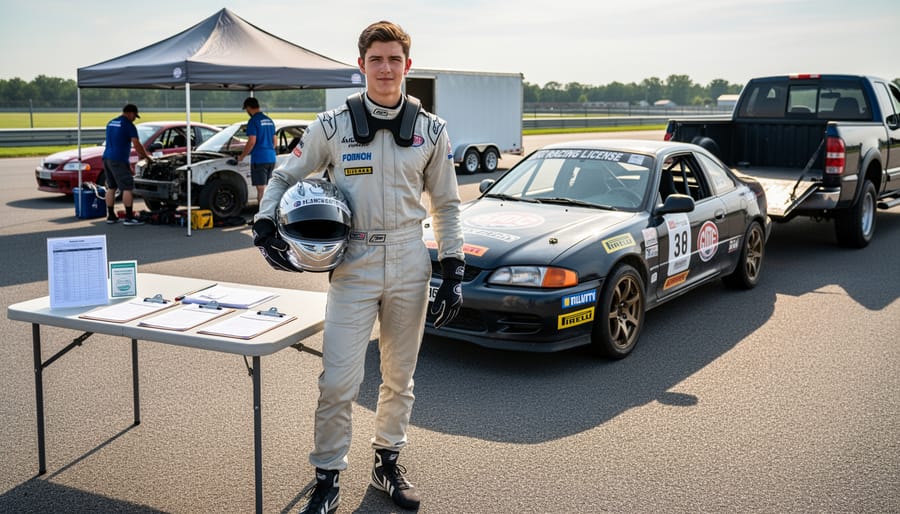
Getting Started in Grassroots Racing
Breaking into grassroots racing may seem daunting, but the entry barriers are more accessible than many enthusiasts realize. Understanding the basic requirements and making informed decisions about your racing path will set you up for success while keeping costs manageable.
The first step involves obtaining the proper licensing. In Canada, most grassroots racing series require a competition license issued by ASN Canada FIA (formerly CASC) or regional sanctioning bodies. The process typically begins with attending a novice racing school or competition licensing course, which combines classroom instruction with supervised track time. These schools cost between $800 and $2,000 and teach essential skills including racecraft, flags and signals, and safety protocols. Some series accept alternative credentials like high-performance driving event (HPDE) logbooks or autocross experience, though direct racing licensing is preferable for wheel-to-wheel competition.
Safety equipment represents a significant initial investment but remains non-negotiable. At minimum, you’ll need a Snell-rated helmet (SA2015 or newer, approximately $400-$1,200), FIA-approved racing suit ($300-$800), gloves ($100-$300), racing shoes ($150-$400), and a head-and-neck restraint system like a HANS device ($800-$1,200). These items have expiration dates and certification requirements that vary by series, so verify current standards before purchasing. Many racers start with mid-tier equipment and upgrade as their commitment grows.
Vehicle preparation depends entirely on your chosen discipline. Some series like ChumpCar Canada welcome budget builds with minimal modifications beyond safety equipment—roll cage, racing seat, five-point harness, fire suppression system, and fuel cell. Others require more extensive preparation. If you’re purchasing a used race-ready car, expect to spend $8,000 to $25,000 for competitive grassroots machinery. Building from scratch offers satisfaction and customization but demands mechanical knowledge and time.
Choosing the right series requires honest assessment of your budget, available time, and racing goals. Consider geographic accessibility—traveling across provinces adds substantially to seasonal costs. Series with spec classes or restrictive rulebooks typically offer closer competition and lower ongoing expenses compared to open-formula racing. Attend events as a spectator, talk with current competitors, and evaluate the community culture before committing.
Canadian winters present unique considerations. Most racing seasons run May through October, meaning equipment sits idle for months. Some racers participate in winter karting or simulator competitions to maintain skills year-round. Storage costs and off-season vehicle maintenance should factor into your planning.
Start conservatively. Many successful racers began with autocross or track days before transitioning to wheel-to-wheel competition. This progression builds car control skills while requiring less financial commitment upfront, allowing you to confirm your passion before diving into the deeper end of motorsport.
Cost Considerations and Budget Planning
Understanding the financial commitment required for grassroots racing helps aspiring competitors make informed decisions about which discipline aligns with their budget and goals. The reality is that motorsport participation requires significant investment, but costs vary dramatically depending on the series and discipline you choose.
Entry-level autocross represents the most affordable gateway into competitive motorsport in Canada. You can participate with a street-legal vehicle that passes basic safety inspection, requiring minimal modifications. A typical season of autocross events, attending 10-12 competitions across organizations like the Sports Car Club of British Columbia or Toronto Autosport Club, costs between $500-$800 in entry fees. Add approximately $400-$600 for tires, $200-$400 for fuel, and $500-$1,000 for basic safety equipment including a helmet and the season total remains under $3,000 for many participants.
Track days and time attack events occupy the middle ground. Entry fees range from $200-$400 per day, with serious competitors attending 6-10 events annually. Vehicle preparation becomes more intensive, with brake upgrades, safety equipment, and appropriate tires essential. Budget $2,000-$4,000 for mechanical preparation, $1,500-$3,000 for consumables including brake pads and fluids, and another $2,000-$4,000 for tires depending on compound choice and driving style.
| Discipline | Initial Investment | Per-Event Cost | Annual Budget |
|---|---|---|---|
| Autocross | $500-$1,500 | $50-$80 | $2,000-$3,500 |
| Track Days | $3,000-$6,000 | $300-$500 | $8,000-$15,000 |
| Club Racing | $15,000-$40,000 | $800-$1,500 | $20,000-$50,000 |
| Rally | $20,000-$50,000 | $1,500-$3,000 | $25,000-$60,000 |
The figures represent conservative estimates for competitors maintaining their own vehicles and handling basic preparation work independently.
Wheel-to-wheel club racing through organizations like CASC Ontario requires substantially higher investment. Purpose-built race cars meeting specific safety regulations cost $15,000-$40,000 for entry-level categories. Annual costs including entry fees, tires, fuel, maintenance, and transport easily exceed $20,000 for regional competition.
Rally represents the highest grassroots investment, requiring purpose-built vehicles with extensive safety equipment, rally computer systems, and significant durability modifications. Combined with entry fees, recce costs, service crew expenses, and inevitable damage repairs, budget-conscious rally competitors should anticipate $25,000-$40,000 annually minimum.
Hidden costs deserve consideration across all disciplines including trailer and tow vehicle expenses, race licensing fees, track insurance, and ongoing maintenance between events. Canadian competitors also face seasonal storage costs and potential import duties for specialized parts unavailable domestically.
The Canadian Advantage: Unique Aspects of Grassroots Racing North of the Border
Canadian grassroots racing possesses several distinctive characteristics that set it apart from motorsport programs in other regions. Understanding these unique aspects helps prospective racers appreciate both the opportunities and challenges of competing north of the border.
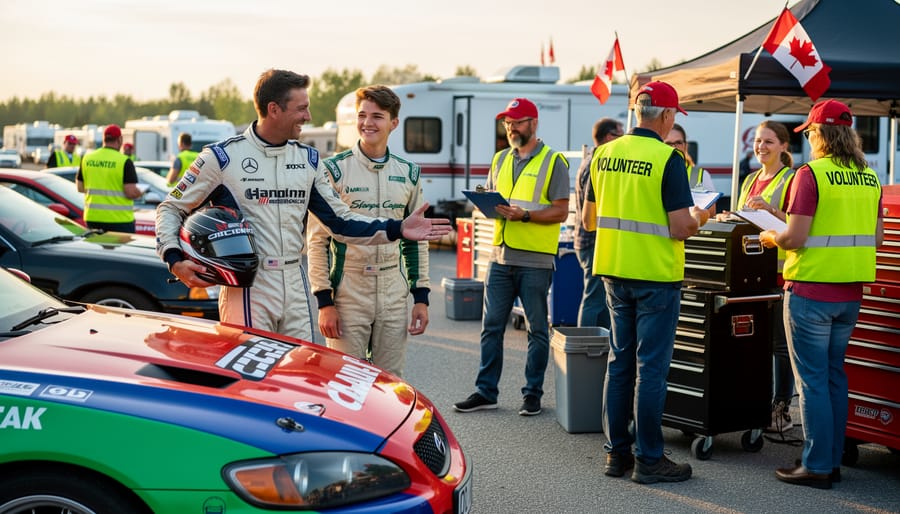
The volunteer-driven foundation represents perhaps the most defining feature of Canadian grassroots racing. Unlike many American series backed by corporate sponsors or large sanctioning bodies, Canadian programs typically rely on dedicated volunteers who organize events, maintain facilities, and serve as officials. This community-oriented approach creates accessible entry points but also means participants often contribute beyond just driving—whether helping with timing, corner marshaling, or track cleanup.
Canada’s geographic diversity presents both advantages and complications. Racers in British Columbia enjoy year-round opportunities at facilities like Mission Raceway Park, while those in Ontario and Quebec face condensed racing seasons from May through October. This seasonal compression creates intense competition calendars but also forces racers to maximize limited track time. Some enthusiasts address this by participating in winter ice racing or traveling to indoor karting facilities during off-months.
The pathway from grassroots to professional motorsport in Canada follows distinct routes. While American racers might progress through NASCAR regional series, Canadians often advance through programs like the NASCAR Pinty’s Series or various single-seater championships. Rally racing holds particular prominence, with Canada’s strong rally tradition providing clearer professional pathways than in many other disciplines.
Provincial racing associations maintain significant autonomy, resulting in varied licensing requirements and safety standards across regions. This decentralized structure allows programs to adapt to local needs but requires racers relocating between provinces to familiarize themselves with different regulatory frameworks. Despite these regional variations, the tight-knit Canadian racing community frequently shares resources, knowledge, and support across provincial boundaries, reinforcing the collaborative spirit that defines grassroots motorsport nationwide.
Finding Your Local Racing Community
Connecting with Canada’s grassroots racing community starts with identifying regional clubs and sanctioning bodies. Organizations like CASC (Canadian Automobile Sport Clubs), Regional ASN Canada FIA clubs, and provincial racing associations serve as primary gateways to local motorsport activities. Each province typically hosts multiple clubs specializing in different disciplines, from road racing and autocross to rallycross and time attack events.
The most effective approach involves attending events as a spectator before committing to competition. This allows you to observe different series firsthand, assess the competitive atmosphere, and understand the technical requirements specific to each category. Most clubs welcome newcomers at the paddock, where racers are often eager to share insights about vehicle preparation, costs, and competition formats.
Social media platforms have become invaluable resources for connecting with racing communities. Facebook groups dedicated to specific series or regions provide real-time discussions, event schedules, and classified sections for equipment. Many clubs maintain active Instagram accounts showcasing event highlights and participant experiences.
Online forums remain relevant, particularly for technical discussions and historical knowledge. Platforms like CornerWorkers.com and region-specific forums offer detailed threads about rule interpretations, setup advice, and event reviews. LinkedIn can connect you with automotive professionals already involved in grassroots racing, providing mentorship opportunities and industry perspectives on Canada’s motorsport landscape.
Canadian grassroots racing series represent more than just competitive motorsport—they embody an accessible pathway into racing that prioritizes community, skill development, and pure driving passion over massive budgets. From the wheel-to-wheel action of the Nissan Micra Cup to the grassroots ethos of regional time attack events, these programs have successfully lowered the barriers to entry while maintaining competitive integrity.
The future of grassroots racing in Canada looks promising, with series organizers continuing to innovate with spec racing formats, arrive-and-drive programs, and transparent cost structures that make participation financially feasible. These initiatives are cultivating the next generation of Canadian racing talent while fostering tight-knit communities of enthusiasts who share knowledge, resources, and encouragement.
If you’ve been considering taking that first step into competitive motorsport, there’s never been a better time. Start by attending local events, connecting with series organizers, and speaking with current participants who universally emphasize the welcoming nature of the grassroots racing community. Whether your goal is developing advanced driving skills, experiencing the thrill of competition, or simply connecting with like-minded enthusiasts, Canadian grassroots racing offers an attainable and rewarding entry point into the world of motorsport.